Democrats Ready to Party, Work

Convention looks back, forward

by Brian Leubitz

By all accounts, 2012 was a fantastic year of electoral success for California Democrats. The president, legislative supermajorities, ballot measure success and much more. However, with a series of special elections and some possibly competitive races in 2014, there is much work to be done as California Democrats meet at the annual convention in Sacramento this weekend.

As for the big decisions of the weekend, there is only one contested race. Chairman John Burton and the Vice chairs, Alex Rooker and Eric Bauman, are uncontested. The race for the open seat of Secretary is between Daraka Larimore-Hall of Santa Barbara County and Carolyn Fowler of Los Angeles County. I have endorsed Daraka, an amazing grassroots and netroots activist currently serving as Chair of the Santa Barbara County Democratic Party. However, that isn’t to say that I haven’t heard great things about Carolyn Fowler. Either way, I’m sure we’ll be in good hands.

I’ll be at the convention, where in addition to tweeting up a storm, I’ll also be attending the always long and exciting Resolutions Committee, where I serve as a Co-Chair. If you have any thoughts, feel free to leave them here or tweet at me: @BrianLeubitz. I’ll also be using the hashtag #CADem13, and so should you!

Non-Profit Disclosure

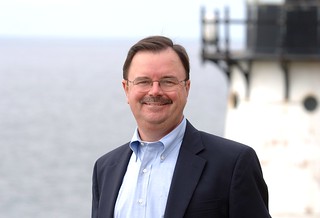
San Mateo County Supervisor Richard Gordon, photographed at the Montara lighthouse for California Counties magazineAB 914 would require disclosure on political spending

by Brian Leubitz

At the end of the Prop 32 campaign, a huge lump of cash floated into those anti-labor coffers from parts unknown. You could trace it back a few steps, but the trail grew cold after a while, and the Fair Political Practices Commission (FPPC) subpoenaed records. Of course, by the time that information came out, the election was over and people had moved on.  But Asm. Rich Gordon is looking to skip over all that and requred the disclosure up front.

The FPPC agreed to support a half dozen pieces of legislation, including AB 914 by Assemblyman Richard Gordon (D-Menlo Park).

Gordon’s bill would require nonprofit groups that spend 10% of their money in a year on California elections to disclose contributions they make and the names of the original donors who provide $10,000 or more to the group. (LA Times)

Now, AB 914 is far from all the campaign finance reform we could have dreamed about. After all $9,999 is still quite a large amount of money, and can be bundled to greater heights quite easily. But given the constraints of Citizens United and the rest of the Supreme Court’s First Amendment jurisprudence, it is kind of where we are right now.

Going After Anti-Gay Tax Exempt Status

Measure would revoke California tax exempt status of Boy Scouts and other groups that discriminate against LGBT community

by Brian Leubitz

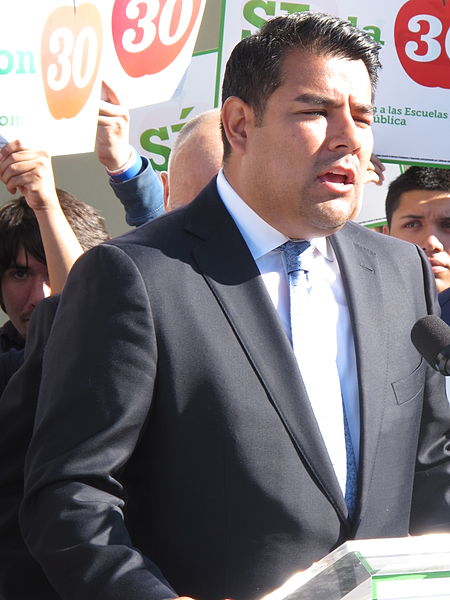
Sen. Ricardo Lara, Chair of the Legislative Latino Caucus in addition to being a member of the LGBT caucus, is working with a number of LGBT focused organizations to strip California tax exempt status from discriminatory groups:

The Youth Equality Act, sponsored by Sen. Ricardo Lara, D-Long Beach, would deny tax-exempt status to youth groups that discriminate on the basis of gender identity, race, sexual orientation, nationality, religion or religious affiliation.

That means those groups would have to pay corporate taxes on donations, membership dues, camp fees and other sources of income, as well as sales taxes on food, beverages and homemade items sold at fundraisers.(Lisa Leff/HuffPo)

The Boy Scouts cite the many good things they do, which are many, as a reason to keep their tax exempt status.  But apparently, those good things don’t apply to gay teens.

This bill, which is the first of its kind in the nation, has a long way to go, but with the partisan breakdown of the Legislature, the biggest question is what Gov. Brown will do with it. Of course, the Boy Scouts could just end their discrimination, and not have to worry about the bill at all. Their is talk of a resolution that would end the discrimination, but no official proposal has been released.

Lessons (Not) Learned From the Chevron Fire

Chevron Refinery Fire

On Friday, federal accident investigators told California legislators that the state’s patchwork of oil industry regulations needs a serious overhaul. The Chevron fire that produced a toxic cloud and sent 15,000 people to the hospital could have been prevented, but the system was reactive and not designed to foresee and forestall problems, said the U.S. Chemical Safety Board. Duh. The board didn’t need 18 months to come to that conclusion. But Don Holstrom, lead investigator for the board, did put his finger on one problem: the need to bump up the number, skills, and authority of refinery inspectors.

Something smells when an agency purposefully cripples its own enforcement abilities. One good example is the Department of Toxic Substances Control (DTSC). The DTSC exists to protect communities like Richmond from toxic harm.  And for years, it’s done a very poor job of it.

The DTSC has broad statutory authority to sanction these giant chemical plants for toxic releases like the one that Chevron caused in its fire, but it consistently refuses. Better yet, the DTSC should play a pro-active role in preventing harm as the department is supposed to do. So, you’d think the DTSC would view having refinery inspectors on staff as a high priority-inspectors that could be given broad latitude to inspect the guts of a refinery where hazardous substances slosh around and not just its excrement. Evidently, the DTSC thinks the fewer refinery inspectors the better.

The DTSC has only two refinery inspectors for the entire state and one of them is green and in training. The DTSC used to have more. But when other inspectors from its refinery unit retired or left, the DTSC didn’t bother to replace them. Nine vacancies in the unit handing refinery inspections were the result. Two scientist positions were approved for the refinery inspection unit and then inexplicably redirected to other positions and regions.

Refinery inspections are the most complex kind and the scientists that do them sometimes take a week to complete them. These scientists know the ins and outs of dealing with refineries. The DTSC maintains that any scientist can conduct a refinery inspection, but that just isn’t true. “Anyone who says that all DTSC scientists can conduct them and are trained to do them is either lying or out of their mind,” says one DTSC career investigator.

Under the direction of Chief Deputy Director Odette Madriago positions can be cut or simply re-directed, the investigator said. On top of that, “Odette has put in place the strictest travel requirements of all CAL EPA.”  The inspectors and investigators that have to travel have to fill out a lengthy document and have to get approval from their supervisor before they can go do an inspection or investigation. “These travel restrictions have allowed polluters to go unchecked and unregulated,” the investigator said.

One explanation is budgets are tight. Another is that it isn’t in the interest of someone like Ms. Madriago to regulate an industry in which she invests. She’s invested up to $100,000 in Chevron and in BP Amoco. Why regulate these refineries and sanction them millions of dollars that could affect their stock price?

Both Ms. Madriago and DTSC Director Debbie Raphael have taken to meeting behind closed doors with refinery executives, say DTSC sources. Normally, when an issue is discussed the DTSC official most involved is invited in to participate. Not anymore. “Ever since Debbie’s been here, Odette goes with Debbie everywhere to take these tours on oil refineries,” said the investigator. “They are inseparable. Odette is always there. They meet with refinery officials without the knowledge of the regulators behind closed doors.” A visit by Ms. Raphael and Ms. Madriago to a Chevron refinery last fall irked inspectors who were never told. “We show up at a refinery and we have to hear it from the city manager or CEO that Debbie and Odette were there,” said one inspector. “We find out when we go.”

Now that manpower is tight, inspections are cursory because they are rushed-and that endangers health and safety, he said. The inspector proposed a program of cross-training between regions so scientists could perform inspections in their own regions. The proposal didn’t even get a cursory response from DTSC’s director. “You just have to put this into perspective, we aren’t robots, we’re human beings,” said the inspector. “You put a lot of stress on inspectors and things get missed. There wasn’t any thorough inspecting going on, how can there be?”

Is it any wonder that California’s refineries experienced 41 new accidents, leaks, chemical releases, fires, break-downs and other failures since the Richmond fire last August? That’s about two a week, according to a new coalition spearheaded by UC Berkeley’s Labor Occupational Health Program that did the research and is calling for a new system of regulation.

With the right resources, DTSC sources say inspectors could help make sure a refinery’s operations were safe. “In some cases, the facility might have some device that is not properly working and hazardous waste might be escaping,” said the investigator. “Corroded pipes are in that ballpark.” Inspectors need to examine an entire facility to make sure what the facility claims about the content of the hazardous waste it generates at the other end is true, he said.

But instead of emphasizing this, Ms. Raphael is dismantling a pollution source reduction program that encouraged businesses to switch out harmful chemicals and use safer technology in favor of reassigning personnel without the appropriate skills to develop rules for manufacturing greener products. “Perhaps Odette is so hell-bent on eliminating the source reduction program because the program has history targeted refineries,” said one DTSC scientist. “Refineries have not appreciated the attention and have complained that we unfairly target them.”


The last thing that is needed is another blue-ribbon commission the DTSC can hide behind
like the one Governor Brown formed to study the issue of refinery regulation. The DTSC began gathering refinery profiles more than a decade ago in an initial step to regulating the industry, a tacit admission that the agency could already be doing far more than it is. Then the industry’s lobbying killed it on the grounds of national security.

No, we need a system where regulators enforce existing laws, prioritize their core responsibilities, and publicly provide information in real time on company audits, fines, and regulatory actions taken by all involved agencies in one central, easily accessed database.

And we need their managers to get out of the way. The day the Chevron fire happened, one inspector was scheduled to take vacation. “I remember saying I can cancel my vacation and my supervisor said I might as well take my vacation. It was business as usual. I didn’t think it was right.” Instead, he said the department has blinders on, slapping down inspectors who want to take a more holistic approach. “Don’t worry about the fuel system or this production unit over here,” he said. “That is what we are told.”

Shame on California-allegedly the most progressive state in the nation-for not already having a refinery strike force of inspectors across agencies working together on assessments of a refinery’s structural integrity, from corroded pipes to fugitive emissions. And shame on California for not taking some players off the existing team-players with financial conflicts of interest like Odette Madriago that may have broken the law.

____________________________________________________________________

Posted by Liza Tucker, Consumer Advocate and author of Consumer Watchdog’s Golden Wasteland report on the toxic environment at DTSC. Follow Consumer Watchdog on Facebook or on Twitter.

Rep. Devin Nunes Goes After Central Valley Legal Aid

devin nunes


Congressman with close dairy ties seeks to end “political agenda”

by Brian Leubitz

The California Report has a very interesting report on a case heading to a federal appellate court involving Rep. Devin Nunes (R-Tulare) and a Central Valley Legal Aid group. The audio report is short, and well worth a listen.

But long story short, California Rural Legal Assistance has been accused by Rep. Nunes of using tax money for political purposes.  CRLS seeks to help farmworkers, primarily by getting them back wages and fair working conditions.  As you might expect, these are not causes close to the hearts of the dairy farmers that operate in and around Rep. Nunes district.

Now the question at hand is whether CRLA should be required to hand over information regarding thousands of clients that they have helped, or whether that information is subject to attorney-client privilege. The issues is that for many of these workers, the fact that they even went to an attorney is an offense that could cost them dearly.

After the oral argument, the matter will be in the hand of the courts to decide the scope of the privilege, with dire results for farmworkers at stake.  

Is an Earthquake Early Warning System Real?

SOS 4905Sen. Alex Padilla hopes to give Californians some very valuable seconds

by Brian Leubitz

On the East Coast, their major disasters give a bit of notice that they are coming. Hurricane tracking isn’t perfect, but at the very least, those living along the coast have some time to decide whether they want to evacuate. Earthquakes, not so much.

The technology for earthquake detection currently maxes out at about 60 seconds of warning. But for a big earthquake, that warning could save quite a few lives. Sen. Alex Padilla is pushing a bill to set up such a system in California, and apparently this is very real.

“A fully developed earthquake early warning system would provide Californians critical seconds to take cover, assist loved ones, or pull over safely to the side of the road.  It could allow time to stop a train and power down other critical infrastructure,” said Senator Alex Padilla.

“An earthquake early warning would speed the response of critical public safety personnel by quickly identifying areas hardest hit by the quake,” Padilla said. “California is going to have an earthquake early warning system, the question is whether we have one before or after the next big quake,” added Padilla.

The bill, SB 135, was passed out of the Senate Governmental Organization Committee, and next heads to the Natural Resources Committee. Current cost estimates are running well under $100 million, which seems like quite the bargain.

Bob Mulholland Gets Cheeky with RNC

fundraiser12Longtime Democratic consultant, activist cautions Republican leaders about local club

by Brian Leubitz

Bob Mulholland rarely misses a chance to poke a stick at a gathering of Republicans, and an upcoming RNC meeting is no different. If you don’t recall the references, a RNC staffer was fired by Michael Steele at the nightclub reference below because of a 2010 incident.

H/t to Josh Richman/Political Blotter

To: Reince Priebus, RNC Chair

Jim Brulte, Ca Republican Party Chair

They’re Not in Kansas on Wednesday


Just some friendly advice since you have a RNC meeting on Wednesday (9AM) at the Loews Hollywood Hotel, located at 1755 North Highland Ave.

Your meeting is only a 2.3 mile Taxi ride to the Voyeur West Hollywood Club, an erotic bondage-theme sex simulating club, located at 7969 Santa Monica Blvd. in W. Hollywood, so you might want to assign Monitors (or GPS anchor bracelets) on your RNC Members, especially those from Kansas, Nebraska, Idaho, etc., if they don’t have their wives with them.

Just ask former RNC Chair, Michael Steele, who tried to explain why the RNC paid $1,946.25 for an “outing” at the Voyeur (2/4/10) by RNC people. Never did read if the RNC was reimbursed for that wild night of “relaxation.”

Stick to your meetings and avoid the “extra entertainment” options.

However, if some members need to get out and “experience” a Club, not seen at home in Kansas, Bruce Herschensohn and I would recommend the Seventh Veil at 7180 Sunset Blvd in Hollywood. Bruce always thought it was a discreet Club, and less than a mile from your meeting.

Sincerely,

Bob Mulholland

Fracking Bill to Natural Resources Committee

Fran Pavley-Democratic Club-805-Simi Valley-AD38-Headquarters-DEM-OpeningSen. Fran Pavley’s fracking bill to be considered today

by Brian Leubitz

Senator Fran Pavley (D-Agoura Hills) has been an environmental leader in the Legislature since the day she stepped into the Assembly in 2000, including work on the landmark climate change bill, AB 32. Her current environmental focus is the question of hydraulic fracturing, the process of injecting liquids into soft rock to release trapped hydrocarbons. Today her bill, SB 4, heads to the Natural Resources Committee. (Click here for more bill info)

The bill is  far from perfect, and isn’t the complete moratorium that some would like to see. But, it is an attempt to establish wide-ranging protections for the public when it comes to the rapidly-growing practice of hydraulic fracturing of underground rocks to get the oil and gas inside.

“The public is concerned,” Senator Pavley said. “They have become aware of both the huge amount of fracking we could see in California, and of how little we know about the operations already taking place in our state.”

The bill would put many new protections on what is now a largely unregulated industrial practice. For the first time, frackers would need to obtain a permit, give 30-day’s notice of operations to nearby property owners, and provide regulators with a list of chemicals they plan to use. The bill provides for trade secret protections the industry wants, but also requires them to fund air and water quality monitoring. Many of these regulations are similar to ones either proposed or already in place in numerous other states. And, unfortunately, Pavley’s SB 1054 to require notice of fracking to neighbors and regulators last year was killed by industry lobbying.

“These are the kinds of basic protections needed to protect public safety,” Senator Pavley said. “We have already seen contaminated water from other industrial sources sicken people and destroy entire towns in California. We must not repeat this pattern.”  

On a related note, fracking could be a hot topic at the California Democratic Party convention, as environmental leaders are attempting to get a resolution supporting a moratorium.

Municipal CEQA Reforms

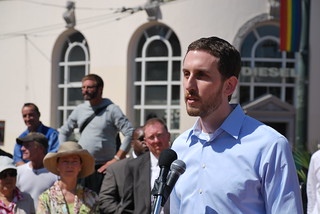
17th Street Plaza openingSan Francisco Supervisor Scott Wiener looks to tweak local CEQA regulations

by Brian Leubitz

You may have noticed a thing or two about the question of “reforming” the California Environmental Quality Act. CEQA has been used to hold up projects both good and bad for the environment and the community. Some tweaks would help expedite good projects, but the heart and soul of the legislation is important for the long term environmental future of the state. But one of the issues that is less clear is the role of local regulations on CEQA appeals.

It won’t surprise you to learn that San Francisco has some of the most confounding permit regulations. I learned just how confounding when a neighbor, who had already received a permit had to change a small aspect of some renovations. The process is something of a mess, to say the least, and can end up with some very high costs to get a simple project completed. However, Supervisor Scott Wiener, is looking to maintain the important role of environmental review, while trying to make repairs and renovations easier on homeowners in SF.

Under his proposal, which goes to the board’s Land Use Committee on Monday, appeals would need to be made within 30 days of a project’s initial approval. His measure also would enhance the system for notifying neighbors and other affected parties.

In doing so, the measure would end the ambiguity that allows environmental appeals of previously approved projects whenever any subsequent permit is pulled – even if the work is minor and does not affect the scope, look or nature of a project.(SF Chronicle)

Now, I’m sure the law proposed will go through some modifications before it becomes law, but this kind of expediting local environmental review while preserving the core goals is just as important, if not more important, for your average homeowner. It will likely directly impact more Californians than some of the proposals bandied about in the legislature these days. We need to keep a close eye on these type of changes, but if done right, they can be positive for the community as some of these small project holdups are what give CEQA a bad name. We need CEQA as a tool to fight bad and environmentally reckless development, and maybe some of these small tweaks can stabilize CEQA’s role for the long-term.

Photo credit: SF Supervisor Scott Wiener at 17th Street Plaza opening by Jamison Wieser, on Flickr

Improving Cal Grants

Reforming Crucial Access Program for Higher Education

by Brian Leubitz

CalGrants, in their current form, have been around since the beginning of the last decade. So hopefully in that time we have learned a thing or two about works and what needs work. Back in 2004, the California Student Aid Commission looked at the new program and their report included some interesting numbers at the time:

In 2001-02, 61 percent of the Competitive Cal Grant recipients were under 25 years of age – a younger than anticipated recipient pool. After consultation with segmental representatives, the Commission adjusted the selection criteria to allow extra consideration for older, late-entry students. In 2002-03, 35 percent of the Competitive Cal Grant recipients were under 25 years of age.

In 2001-02, the majority (81 percent) of the Competitive Cal Grant recipients were from  families with annual incomes below $24,000. In 2002-03, 84 percent of new recipients had incomes under $24,000.

CalGrants were designed to facilitate access to higher education for older students as well as lower income students. And when available, they serve that purpose. However], considering the big cuts to the program over the last few years, the goals for the program may have been ratcheted down a notch. But, that is not to say that we can’t improve the system. Over the next week, a group of legislators will be highlighting their reform proposals to the system. Here are a few of those highlights:

  • AB 1241 – Weber (D-San Diego) – Extending Eligibility to 4 years after high school for Cal Grant A & B
  • AB 1285 – Fong (D-San Jose) – Increasing eligibility for first-year students
  • AB 1287 – Quirk-Silva (D-Orange County) – Decreasing paperwork for renewing Cal Grants
  • AB 1364 – Ting (D-SF) – Sets minimum Cal Grant B at $5900 for 2014-2015, increasing by California CPI
  • These changes all go a step towards making higher education more attainable, but ultimately, we need to increase funding to CalGrants to widen the breadth of the program’s success. Beyond our natural resources, businesses come to California for the extraordinary skilled labor that we have, much of that thanks to our higher ed system. Investing in our labor force means a stronger economy in the future.