Tag Archives: Coastal Commission

Unreasonable: A Defense of the Coast and the Coastal Commission

Coast photo 9028010047_f1c4c71dc8_z_zps84cd7cca.jpgOutgoing Coastal Commissioner issues warning about “compromise”

by Brian Leubitz

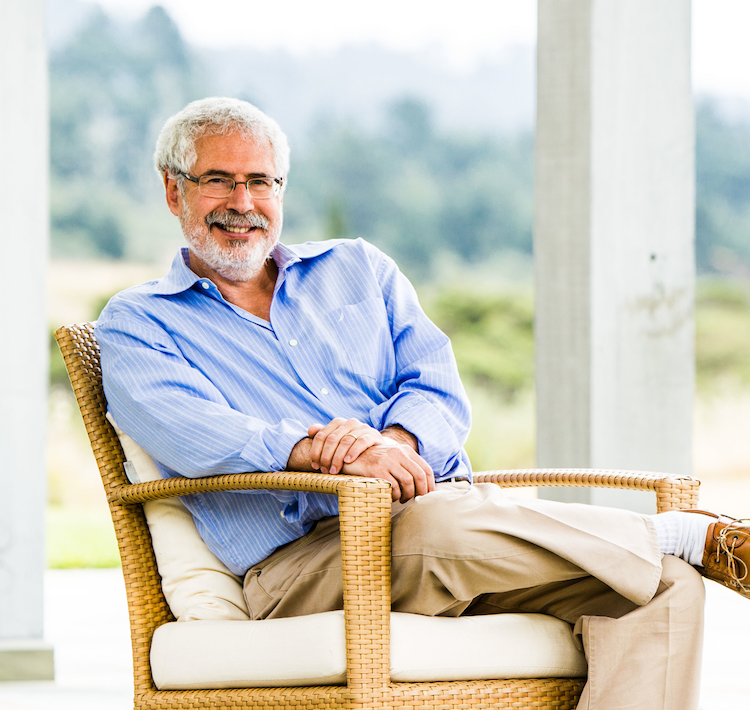
Steve Blank is hardly a radical anti-business guy. He was appointed to the Coastal Commission by Gov. Schwarzenegger, and has been something of a Silicon Valley serial entrepreneur. He’s a long time environmentalist, but it is hardly what has got him attention over the years. Last week, Blank resigned from the Commission after serving over six years.

And since Peter Douglas, the longtime director of the Coastal Commission, passed away a little over a year ago, the stalwart roadblock to mass development of the Coast has been degraded. Douglas was the steel in the spine of the Coastal Commission. He demanded a Coast that we could all use, enjoy, and savor for generations to come. But Douglas can’t be there anymore, and the role of the Commission is now in doubt.

But, Blank’s call for Coastal conservation was clear, and will hopefully embolden the Commissioners in their core mission. They are there to protect the coast for future generations, and sometimes that leads them to what is called unreasonable. Blank lays it all out in a speech he delivered to the California League of Conservation Voters:

Over the last few years I learned that unless there is a vigilant and engaged public, lobbyists and developers will take over the commission using “reasonableness” and “fair compromise” as their watch words. It is up to individuals and our environmental organizations to become more active on coastal issues.

As Peter Douglas used to say, the coast is never saved, rather it is being saved every day,” as an ongoing process.

Unless we insist that our elected officials appoint people who are willing to prioritize the principals of the Coastal Act over both their own careers and the notion of being “reasonable” within the larger ecosystem of day-to-day California Politics, our children may one day look back at pictures of the California coast and wistfully say, “Look what our parents lost.”

As somebody who spends much of my time along the coast, running along its beaches, watching the waves for a whale, or simply enjoying the beauty of the Coast, I long for future Californians to share in its beauty. Our natural resources are far more easily exploited than restored, and the cost of the exploitation is typically far larger than we ever consider at the outset.

Coastal Commission Rejects 241 Toll Road After Epic Hearing

The hearing lasted over 12 hours, and was apparently one of the most raucous and boisterous Coastal Commission meetings in some time. Gathered at the Del Mar Fairgrounds to handle the overflow crowds, the Coastal Commission finally voted last night to reject the planned toll road through San Onofre State Park:

Before a boisterous crowd of more than 3,500 people, commissioners decided 8 to 2 that the proposed Foothill South project violates the California Coastal Act, which is designed to regulate development along the state’s 1,100-mile shoreline. They reached the conclusion following hours of sometimes heated public testimony that pitted protecting the environment against the need to relieve traffic congestion in south Orange County.

The decision was a major setback for the Transportation Corridor Agencies, which has spent years and tens of millions of dollars preparing to construct the 16-mile tollway as an alternative to Interstate 5.

“This project looks like something from the 1950s,” said Commissioner Sara Wan of San Francisco, who voted against the tollway. “Putting a massive project in an environmentally sensitive area, it is inconceivable.”

The Transportation Corridor Agency that runs OC’s toll roads is considering appealing to the US Secretary of Commerce, which owns the land San Onofre State Beach is leased from. Susan Davis successfully attached an amendment to a recent military spending bill to prevent the toll road from being built on federal land, and Bush signed that bill with the amendment intact last month.

The coalition opposing the destructive project was impressive in its size and scope. It included environmental groups from across California, and city governments from the San Diego coast. Surfers were also active and engaged, with help from major surf and skate companies like Etnies and Vans. Obviously the lion’s share of credit goes to the Surfrider Foundation, which has been exhorting people to stop the toll road and “Save Trestles” ever since I was in high school in Orange County over ten years ago. There were finally some Juaneño Indians there to speak up on behalf of an ancestral village and burial ground that would be paved over by the road.

People-powered coalitions don’t just exist in elections – they’re all over our state, and the victory over the 241 toll road is a major victory for just that kind of organizing power. It’s also a key victory for the Coastal Act and a “defining moment” for the commission, one of its members said.

It’s also good to see that the Coastal Commission understands just how much things have changed in this state. No longer can we look to new roads to solve our transportation problems. For environmental, sustainable, climate, and even fiscal reasons, mass transit, particularly rail, is where we need to be investing for our future – not a toll road that will struggle to stay financially viable and see steadily decreasing traffic as peak oil sets in.

More importantly, this victory shows that a people-powered coalition can organize from a very broad base to articulate a 21st century vision of transportation and land use.

Speeding Our Way on the 241? “Not So Fast!” Says the Law

(Now featured in OC Weekly’s Blotter! : ) – promoted by atdleft)

{This is Part 3 of my special report on the proposed extension of the 241 Toll Road to San Onofre State Beach (aka Trestles). If you’d like, you can find the other stories in the “Speeding Our Way to Trestles” series here. As the debate heats up over Trestles and the 241, I’d like to go in depth and examine all the issues involved… And I’d love for you to come along for the ride as we explore what can be done to relieve traffic in South Orange County AND Save Trestles Beach. Enjoy! : ) }

So much for whatever hopes the TCA had that this project could begin any time soon…

(From LA Times)

For more than a year, transportation planners have said that preparations for a toll road passing through San Onofre State Beach were on schedule.

On Wednesday, that message was revised.

Planners now say it will take at least two years longer than expected to get funding and permits for the controversial turnpike, which will complete Orange County’s network of toll roads and link Orange and San Diego counties.

The Irvine-based Transportation Corridor Agencies had hoped to secure funding for the Foothill South by 2008, but underestimated the complexity of the permit process.

So what is it that’s “stopping progress” on this great toll road to nowhere? Follow me after the flip for more…

So what is it that’s now delaying completion of the 241?

The environmental requirements for state and federal wildlife agencies, the Environmental Protection Agency and U.S. Army Corps of Engineers are crucial for funding and eventual approval by the state Coastal Commission.

Ah, the Coastal Commission! Now why might they have issues with the 241 Extension? For starters, look at Article 3 of the Coastal Act. And specifically, Section 30223 states:

Upland areas necessary to support coastal recreational uses shall be reserved for for such uses, where feasible.

Now why should the Coastal Commission allow the 241 Extension to destroy San Mateo Creek, which is AN UPLAND AREA NECESSARY TO SUPPORT COASTAL RECREATIONAL USES?!

And oh yes, let’s not forget Section 30231 of Article 4 of the Coastal Act. This states:

The biological productivity and the quality of coastal waters, streams, wetlands, estuaries, and lakes appropriate to maintain optimum populations of marine organisms and for the protection of human health shall be maintained and, where feasible, restored through, among other means, minimizing adverse effects of waste water discharges and entrainment, controlling runoff, preventing depletion of ground water supplies and substantial interference with surface water flow, encouraging waste water reclamation, maintaining natural vegetation buffer areas that protect riparian habitats, and minimizing alteration of natural streams.

Now how the hell does the TCA expect to prevent all that toxic stormwater to flow down San Mateo Creek into Trestles whenever there is rain? And oh yes, HOW CAN THE TCA EXPLAIN AWAY THE ELEVEN THREATENED OR ENDANGERED SPECIES THAT COULD VERY WELL BE WIPED OUT FOREVER IF THIS DAMN PROJECT WERE TO BE APPROVED??!! Now why, again, should the Coastal Commission violate the very law that it is supposed to be enforcing in order to satisfy the pipe dreams of the TCA?

Why should the Coastal Commission violate Section 30240 of Article 5 of the Coastal Act, which states:

(a) Environmentally sensitive habitat areas shall be protected against any significant disruption of habitat values, and only uses dependent on those resources shall be allowed within those areas.

(b) Development in areas adjacent to environmentally sensitive habitat areas and parks and recreation areas shall be sited and designed to prevent impacts which would significantly degrade those areas, and shall be compatible with the continuance of those habitat and recreation areas.

But how can the 241 Extension be designed to be “compatible with the continuance of those habitat and recreation areas” when this would destroy the entire environmentally sensitive area? That’s the major dilemma here.

However, it looks like the Coastal Act may not be the only legal dilemma for the 241 Extension. The LA Times piece this morning also mentioned the lawsuits:

In addition to environmental work, other hurdles include several legal challenges, including a lawsuit by the state attorney general’s office. The lawsuit says the proposed alignment is too close to an ancient Native American burial ground.

Yes, those lovely, delicious lawsuits! (From OC Register)

California Attorney General Bill Lockyer filed two Superior Court lawsuits [on March 23, 2006] to trip up the proposed extension of the Foothill (241) Toll Road, charging it would bring about excessive noise and an ugly view to park-goers at San Onofre State Beach, as well as severely damage sacred Indian grounds.

Prominent environmental groups filed a third suit, saying toll-road officials didn’t try hard enough to find a different way to ease congestion in south Orange County.

So ya still want to speed your way to Trestles on the 241? Don’t count on it, buckaroo! This ill-advised toll road plan may very well DIE IN LITIGATION HELL!

[poll id=”

97

“]

TAKE ACTION! Coastal Commission Hearing on Bolsa Chica Tomorrow

It’s been a long, long fight, yet it’s still far from over. Even as the Bolsa Chica Wetlands (near Huntington Beach) were recently united with the sea, and as other development plans have been soundly defeated, there’s a new threat facing Bolsa Chica.

Now what is this threat, and what can you do about it? Follow me after the flip for more…

(From OC Register)

A new round of fighting to preserve natural habitat around the Bolsa Chica wetlands begins Thursday in San Diego, when California Coastal commissioners will consider plans to build another neighborhood on the rural land.

The state board is expected to consider zoning a 50-acre property on the outskirts of the wetlands near a flood control channel to make way for a neighborhood of up to 170 homes.

The plan has mobilized neighbors and environmentalists, who plan to caravan by bus to the meeting to convince commissioners to spare greater portions of the land from development. A group of about 25 residents who support the development also plan to carpool.

OK, so local environmentalists don’t want any more development here. Big deal. So what? People want big, fancy homes near the beach. Why stop Shea Homes from providing what people want?

But what if that development puts into jeopardy local avian habitats? What if that development puts at risk all the progress that has been made in preserving the wetlands? What if that development destroys this sensitive ecosystem?

Coastal Commission staff has recommended denying the proposal and has suggested alternatives that would require the land owner, Brea-based Shea Homes, to set aside more land as open space.

The staff recommendation says Shea’s plan calls for building homes on top of coastal wetlands and that it does not set aside a large enough buffer zone around a eucalyptus grove that is an environmentally sensitive habitat for several species of birds of prey.

Even though the Coastal Commission Staff Report has said that the proposed development would encroach upon such sensitive wetlands, Shea Homes somehow wants to continue with this potentially disastrous development. What about the extra traffic? What about the flood threat? What about the increased runoff into the wetlands and to the sea?

This is yet another lame development plan that could destroy our precious coastal environment in Orange County. Unique along the heavily developed coastline of Huntington Beach, the Bolsa Chica Wetlands represent the last stretch of natural, wild, pristine Southern California. We can’t risk this, just for another batch of cookie-cutter McMansions that Orange County doesn’t need.

We need wildlife, not over-development gone wild.

TAKE ACTION! OK, if you can make it to San Diego tomorrow, here’s where the hearing will be:

Catamaran Resort Hotel
3999 Mission Blvd.
San Diego, CA 92109
(858) 539-8700

Oh yes, and activists with the Bolsa Chica Land Trust will be carpooling from Huntington Beach to San Diego tomorrow. For more info, visit their web site or call (714) 846-1001.

[poll id=”

75

“]