Back in October the special session on water seemed dead. Republicans rejected Perata’s water bond plan, which had no funding for dams in it and instead emphasized fixing the Delta and conservation projects. At the time the GOP’s attitude was “it’s our turn” – give us dams, dammit!
No details of the meeting were immediately available. But going into the meeting, Senate leader Don Perata, D-Oakland, tentatively had agreed for the first time to set aside funds, perhaps $3 billion, for work on three reservoirs if there was benefit for the ailing San Joaquin-Sacramento Delta, according to the senator’s office. But Perata has insisted on an annual legislative review of funding for the work, something that Republican lawmakers oppose because it could give legislative critics an opportunity to stall a project. GOP advocates of the dams want all the funding to be available once it is approved without further legislative oversight.
In response, Friends of the River reiterated its arguments against dams (and was approvingly quoted by Steve Maviglio, making one wonder if Núñez is on board with Perata’s cave-in). Dams are simply not necessary to solve our looming water crisis, as conservation and alternative water storage methods can provide for our needs, even during a drought, without the ruinous effects of new dams – dams that virtually none of the studies done on CA water issues and the Delta have suggested are necessary.
Both the water and the health care compromises share a fundamental logic – Democrats give in to a key Republican demand but try and shape the outcome in their favor. It’s not clear if they’ll be able to make an individual mandate affordable or even workable, and it’s not clear that Perata will be able to keep control of dam funding.
More importantly, have Democrats already given up their positions of strength by caving on the key demands? Can Dems, having agreed to an individual mandate and to new dams, reject them again if they are unable to convince Republican legislators or the Republican governor to give in to Dems? Having already given in on the key demands does not put Dems in a strong negotiating or political position.
“Water, water, everywhere, not any drop to drink.” – Coleridge
I think back to The Rime of the Ancient Mariner whenever I read about California’s worsening water crisis. Outside my window is the Monterey Bay, an arm of the world’s largest body of water, the Pacific Ocean. Wouldn’t it be fantastic if we could apply some of our spiffy modern technology to solve the Ancient Mariner’s dilemma and turn all that water into something potable?
Desalination is poised to become one of the next big things in California, and already is becoming a major political issue. In Carlsbad, located a few miles north of San Diego on the coast, a consortium of cities and water agencies has allied with Poseidon Resources to plan the nation’s largest desalination plant, to be co-located with the Encina power station. The plant would create 50 million gallons of water per day, and 56,000 acre feet per year – “enough for 300,000 residents of San Diego County,” touts the project website.
The growing controversy surrounding desalination reveals a deeper truth about our future. The problems we face with water, global warming, and energy are not separate. They are, in fact, facets of a broader crisis of civilization. A solution to one facet must not aggravate another. Like pieces on a chessboard, or blocks in a late-night Jenga game, each piece exists relationally to the others. Building an energy-sucking, pollution-spewing desalination plant is likely to have some unpleasant blowback.
There are at present two primary methods of desalination. The first is known as “reverse osmosis filtration” and the second is “multi-stage flash distillation.” Most of the world’s existing desal plants use one or the other method, which have some differences but also some fundamental similarities. Both require large amounts of energy to produce the potable water, and both require intake from the sea.
Where will this energy come from? Fossil fuels, primarily. The Persian Gulf nations, such as Bahrain and Qatar, run their massive plants with cheap and locally available oil. For the US, however, we’ll have to import oil or natural gas – both of which are facing peaking supplies and rapidly increasing prices – to power desalination plants. And of course, running desal with either of those fossil fuels produces significant carbon dioxide emissions, adding to global warming.
In order to address both the power problem and the intake problem, companies promoting desalination plants here in California have championed what is known as “co-location” – that is, putting a desal plant alongside an existing power plant. This allows desal plants to take advantage of existing energy production as well as use the water discharge normally generated by the power plant. That’s the plan being floated for as many as THREE desal projects at the Moss Landing Power Plant here on Monterey Bay, and for the Poseidon plant at Carlsbad.
The battle over the Poseidon plant, which reaches the full California Coastal Commission on Thursday, is pitting environmental advocates against those who see desalination as a necessary part of California’s future. The project is supported by much of San Diego’s political establishment, from State Sen. Christine Kehoe to SD Mayor Jerry Sanders, most local cities, and Lt. Gov. John Garamendi.
A proposed ocean desalination factory in Carlsbad, California will create between 95,905 metric tons and 170,000 metric tons of CO2 (the variance depends on the source of electricity servicing the desal factory).
Poseidon claims that the plant will be carbon neutral, but the claim – made only two weeks ago in the face of growing opposition – is not fully explained, and appears to rest on the unverified notion that locally produced water would have a smaller carbon footprint to water moved by the State Water Project’s electric pumps. Surfrider has voiced concerns that the plant might fuel further urban sprawl, which would negate any carbon reductions the desal plant provides.
Yet another wrinkle is private ownership itself. In the late 1980s Monterey County approved an ordinance that mandates any desal plant located within the county be publicly owned. Should private companies have any more control over our water supplies, or should desal, if it proceeds, be publicly owned and controlled?
Environmentally friendly alternatives do exist, particularly sub-surface extraction, where salt water is taken from beneath the ocean floor, through beach wells, using sand as a kind of filter. This is being proposed for the Monterey Bay and has been studied for Dana Point in Orange County. But the momentum seems to be instead toward the larger surface plants, using either reverse osmosis or multi-stage flash distillation. As these can produce more water, the possible profits are correspondingly higher for the private companies involved in these projects.
Solar power is also a possibility. World View Water claims to offer a desalination technology powered by the sun that would produce potable water without the carbon pollution or the dependence on dwindling supplies of fossil fuels.
Finally, we need to ask if desalination is even necessary. In 2006 the Pacific Institute released a report Desalination With A Grain of Salt that argued desalination is likely much more expensive than conservation strategies and suggested desalination should be, at best, a last resort. The onset of drought in much of California, the likelihood that global warming will reduce the Sierra snowpack dramatically, and the fact that several parts of California – such as the Central Coast – have already overshot its carrying capacity and are overdrawing local water sources all suggest that desalination should be on our list of solutions to our looming crisis.
If desal is going to be part of 21st century California, we need to do it right. We need to not do further damage to our oceans, to our warming atmosphere, to our unsustainable dependence on fossil fuels. Smart desalination offers many benefits – but dumb desalination will simply make our problems a whole lot worse.
Further Reading:
Aquafornia – fantastic news aggregator covering every aspect of water issues in California
UPDATE by Brian: Robert is too modest to pimp his dKos diary on the FP, so I’ll do it for him. Please give it a rec, as the story is certainly worthy of additional eyeballs.
It’s understandable that conservatives bristle at being called to account for the catastrophic outcomes of their ideological agenda. The devastation wreaked on the Gulf Coast by Hurricane Katrina irreparably damaged the Bush Administration and set the Republicans on the long road to losing the Congress. Millions of Americans saw the effects of Grover Norquist’s “drown government in a bathtub” strategy. The Register‘s editorial pages, long devoted to a similar anti-government, anti-tax, anti-union agenda, have a clear interest in distancing themselves from last week’s disaster.
But their editorial defense does not quite achieve its objectives. The Register does not rebut the fact that OC firefighters lacked necessary equipment that Measure D would have funded. More importantly, the editorial actually reinforces my core argument – that the conservative agenda the Register and others in OC promoted is intended to leave Californians lacking adequate fire protection and placing their safety in the hands of a private market.
First, it’s worth reviewing the basic charges. Last weekend the Register‘s own reporters explained that Orange County Fire Authority lacked basic resources needed to battle back the fast-moving and unpredictable Santiago Fire in its crucial first hours:
Two of the Orange County politicians now complaining about the lack of air support for the Santiago Fire opposed firefighters’ effort to purchase new helicopters and trucks two years ago.
In fact, county officials today are sitting on more than $80 million in excess revenue from a statewide public safety sales tax adopted 13 years ago.
That surplus has been a longstanding sore spot for OC firefighters, who at times this week were so overwhelmed they had to seek refuge inside fire retardant tents.
The firefighter’s 2005 ballot initiative would have redirected a small portion of the ½ cent sales tax, providing $8 million for new helicopters and $33 million for new fire trucks.
[OCFA] fire engines were staffed below national standards, it had fewer firefighters per capita than neighboring counties, and its army of men and women ready to fight the blaze may have been weakened by changes in the county’s volunteer firefighter program….
“We’re out there with a handful of crews trying to stop this big fire, and all we could do was just put out spot fires,” said Chip Prather, chief of the Orange County Fire Authority. “It would have been great to have the cavalry come in, but there were several fires burning, and it was taking time for the resources to get here.”…
The size of those crews was one way that Orange County fell below the national standard. Most of the county’s engines were staffed with three people. Four per engine is the voluntary minimum standard from the National Fire Protection Assn., a private organization that writes fire safety guidelines.
Crews with three firefighters work more slowly than larger crews, according to a study by the Insurance Services Organization, a national group that evaluates fire departments.
The evening the Santiago fire began, Chief Prather and I stood at the Foothill (241) Toll Road and Santiago Canyon Road, watching firefighters set backfires to consume fuel that would have sent the fire into East Orange. Homes in north Tustin were threatened when the fire jumped the 261 Toll Road, potentially burning into Lower Peters Canyon. Homes in Irvine, at Jamboree and Portola Parkway, were nearly lost.
We had no relief for the “left flank” of the fire. That portion of the fire was slipping toward Foothill Ranch and northeast Irvine. But structure protection was the focus, so all our ground resources were in Irvine. I was on the phone repeatedly with the Office of Emergency Services regional command based in Riverside, which was charged with prioritizing all the requests for assistance based on need. Orange County kept getting told that the Santa Ana winds would keep the fire burning toward Irvine. We warned, however, that the fire was slipping south and if it crossed Santiago Canyon Road because of a wind shift, it would burn out of control. Our concerns were dismissed as not consistent with weather predictions.
(North Tustin, where I was born and raised, is where most of my family still resides.)
The situation Spitzer describes is fundamentally one of a shortage of resources. With more trucks, helicopters, and firefighters, Spitzer and Chief Prather’s concerns might not have been dismissed.
Yesterday’s editorial, however, addresses neither of these concers about equipment shortages. Instead they try to claim that the Proposition 172 system of allocating public safety funds worked – despite the fact that, in 2005, Steven Greenhut, the senior editorial writer for the Register, denounced California taxpayers as “weak” for having approved Prop 172 in November 1993, in the aftermath of the 1993 firestorms.
For instance, the Measure D battle two years ago was over the disbursement of Proposition 172 sales-tax funds that voters had already approved for public safety. Conservatives were on both sides of the issue as the firefighters sought to take a share of tax dollars that mostly had gone to fund the Sheriff’s Department and the District Attorney’s Office. This wasn’t about “stingy” taxpayers unwilling to pay for public safety, as the liberals allege, but about divvying up the taxpayers’ money among agencies.
But the Register’s own reporting contradicts this. To revisit the Register article discussed above:
In fact, county officials today are sitting on more than $80 million in excess revenue from a statewide public safety sales tax adopted 13 years ago.
The firefighter’s 2005 ballot initiative would have redirected a small portion of the ½ cent sales tax, providing $8 million for new helicopters and $33 million for new fire trucks.
Redirection of some Prop 172 monies toward fire protection was one of Governor Arnold Schwarzenegger’s Blue Ribbon Fire Commission recommendations – along with replacing outdated helicopters – which Measure D would have accomplished. Nor is it clear that Measure D would have negatively impacted the OC Sheriff’s Department or the District Attorney’s office as claimed. The Yes on D campaign explained – as illustrated by their mailers, which anti-Measure D blogger Matt “Jubal” Cunningham thankfully preserved for posterity – that even with this redirection of part of OC’s Prop 172 allocation, the OCSD and DA would both continue to see increased budgets from Prop 172.
The editorial points out that Orange County and San Diego County are not the only California jurisdictions with underfunded fire protection. But they neglect to explain the source of that problem – in SD, OC, and statewide, it has been 30 years of conservative anti-tax policies, from Proposition 13 to the opposition to Measure D, that has left public services destitute.
Sadly, yesterday’s editorial repeats these arguments:
We pointed out at the time that the average salary and benefit package for firefighters in all categories was about $175,000 a year.
In other words, public fire protection should come at the cost of public employees. They should have to give up health care, pensions, and pay before taxpayers are asked to reallocate already-collected monies to better tackle OC’s perennial firestorms. Apparently, the Register does not believe that firefighters should be able to afford to meet OC’s sky-high cost of living.
Finally, the editorial goes on to validate my conclusions that stinginess with public tax money would lead conservatives to suggest turning everything over to the market. As I wrote on Sunday:
It seems unlikely that Orange County conservatives will be giving up their virulent anti-tax, anti-firefighter crusade even in the aftermath of October’s firestorm. Instead we should expect them to ramp up their argument that private enterprise and the market will do a better job of fighting fires than “greedy” public sector employees.
That is precisely what the Register did in its editorial:
A broader goal would be more privatization efforts and more private ownership of land. Private firefighting firms would have a financial interest to promote prevention, and more private ownership of land would mean better-maintained property. Private owners are far better at protecting their property than public owners, who follow an entirely different set of objectives.
“What we’re trying to do here is provide our policyholders an additional level of protection,” said Stan Rivera, director of wildfire protection for AIG Private Client Group. The average home insured by the unit is valued at $1.7 million….
The Wildfire Protection Unit has six trucks outfitted to spray Phos-Chek, the fire retardant used by the U.S. Forest Service. Customers can have Phos-Chek sprayed on brush surrounding their homes before each fire season. During a wildfire, the trucks are sent out whenever a fire comes within three miles of a home and spray all combustible areas.
Such protection doesn’t come cheap. It’s available only to customers of AIG Private Client Group, which serves affluent individuals and their families. The average customer spends $19,000 a year on the insurance, which may also cover yachts, art collections and ransom demands, Rivera said.
AIG Private Client Group has about 55,000 customers throughout the U.S., Rivera said. California is “one of the biggest” markets for the group, he said.
If you can’t afford this coverage, though, you’re screwed:
Some victims of the California fires may wish they had their own firemarks. During this week’s wildfires, “there were a few instances where we were spraying and the neighbor’s house went up like a candle,” Crays said.
This is the future the Register happily embraces – public fire protection should be underfunded; any attempt to rectify this is an illegitimate grab by overzealous, anti-liberty public unions and their overpaid, greedy workers; and members of the public should be on their own when it comes to fire protection, regardless of ability to pay.
For the thousands of Orange County residents who could not possibly afford this kind of fire protection, the Register’s far right ideology leaves them with nothing. Here’s to hoping that my beloved home of Orange County will finally wake up to the agenda that their conservative elite is promoting.
Many Californians face the blunt edge of the health care crisis. Children, the poor, the elderly – these tend to be the faces of the inhuman abomination we call a “health care system” that gives a privileged few adequate care at the expense of those who cannot afford it.
We’re “ineffective as political sympathy-generators and are therefore typically viewed as a footnote to the debate,” as the aforementioned New York piece puts it. But as our numbers grow, and as we become more aware of the inherent failure of the insurance-based model, we are becoming some of the most ardent proponents of fundamental reform.
The SacBee article is especially valuable for helping to push back against the myth that we young folks who don’t have health insurance lack it because we think we’re invincible, are reckless and foolish. Instead, as the article makes abundantly clear, the problem is that we simply cannot afford health insurance:
Cyndi Rose is an administrative assistant at California State University, Sacramento, and hopes to finish her college studies one day.
The 24-year-old Carmichael resident makes $15 an hour, lives with her parents and prays she won’t get sick because she says she can’t afford health insurance.
Most of her friends, Rose said, are in the same bind….Rose dropped out of UC Davis a year shy of a degree after her money ran out. Now a temporary worker in the student affairs office at CSUS, she is not eligible for employer-based health insurance.
Until she turned 24, Rose was insured through her parents’ policy. She inquired about buying an individual policy but concluded the high-deductible, limited plans on the market weren’t worth the price – more than $100 a month.
“What’s the point if I could never see a doctor unless I was dying?” she asked. “Like the majority of my friends, it comes down to whether we want to keep our cars from being repossessed and paying down high-interest credit cards.”
The problem is twofold. First, we young Californians (I’m 28) have faced declining economic prospects this decade – middle-income jobs are difficult to find, and many of us, even we with college degrees, are stuck in entry-level or, in my case, part-time work that rarely comes with health benefits. We have enormous student loan debts, thanks to a state that has decided to abandon its commitment to affordable education. And we face a soaring cost of living – without any assets or decent income to pay for even those basic needs, let alone purchase a useless health insurance policy. The SacBee article notes that 2 of every 5 college graduates are uninsured within a year of graduation.
Most of us young Californians badly want health care. For those of us who are currently “healthy” we’d like access to affordable dental cleanings, vision checkups, and the knowledge that if we have some kind of accident or injury we can see a doctor without it breaking our already strained budgets. We want to be able to begin living a healthy life, instead of neglecting problems that will really hurt us when we get older. We want to start families, but without health care, having a child seems like an impossible option.
But there are many young Californians who are not “healthy” – who have persistent medical problems that the insurers, through their greed, do not want to touch. This is the other major accomplishment of the SacBee article – showing that we’re not only unable to afford health care, but that many of us have medical problems that are going unattended:
Robert Heredia, 19, works about 30 hours a week making minimum wage as a bus boy at Centro Cocina Mexicana, a Sacramento restaurant, and attends Sacramento City College off and on.
He suffers from cardiomyopathy, a disease in which the heart muscles become inflamed and malfunction. Heredia has been uninsured since he turned 19, the age limit for the state’s Healthy Families program.
Since he can’t afford regular medical care and barely affords medication, the emergency room at Sutter General Hospital has become his doctor of last resort….
Three times since January, Heredia has been rushed to the emergency room with stabbing chest pain and gasping for air. The last time, he had to leave work while spitting up blood.
“I wish I could get regular treatment, but there’s no way we could afford it,” said Heredia, who lives in South Sacramento with his family. “It’s just something I’ll have to live with.”
Let me give you my example. Through my old job in Seattle I had health insurance that ran out October 1. Two weeks ago I got a letter from the insurer explaining to me my eligibility for COBRA coverage. It would cost me $220/mo, which was bad enough. But because the coverage is geared toward “in-network” providers located in Washington State, with no out-of-pocket limit and little actual benefits for going out of network, it would be of little value to me even if I could afford the premium, which I cannot.
As a part-time employee I’m ineligible for health benefits at my current job, and the prospects aren’t great that I’ll be hired full-time (unless state higher ed budgets suddenly balloon). The coming recession means that it’ll be hard for me to find a job with health benefits. At this rate, the only prospect that I’ll be able to find health coverage is when I get married next summer. I’m lucky – I don’t have the health problems someone like Robert Heredia has to suffer with – but dental, vision, and affordable emergency care are all beyond my means.
Young uninsured Californians like myself find the individual mandate plans, like those proposed by Arnold but also by Hillary Clinton and John Edwards, to be especially appalling. Part of the logic behind the individual mandate is that if we who are assumed to be young and healthy and just too reckless to spend our money on insurance are forced to buy it, insurers can affordably write policies for older, sicker people. Deval Patrick, the Democratic governor of Massachusetts, which just implemented Mitt Romney’s individual mandate plan, “blames “young folks” for not getting insurance because “they don’t think they’re ever going to be sick.””
But it really doesn’t work that way. The SacBee article quotes Anthony Wright, of Health Access California, whose analysis suggests Arnold’s plan won’t provide enough subsidies for us part-time and low-income young folks to afford health insurance. As Massachusetts has found, their “universal” health insurance mandate has left out young people – CBS News estimated in August, after the mandate went into effect, that of the 230,000 who still lack insurance, over half – 130,000 – are young people.
It’s a tough sell because one of the cheapest family plans available, unsubsidized, with drug coverage, is $662 a month. When [CBS reporter Wyatt] Andrews talked to [young] contractor Roger Thompson, there was no way.
“I have no choice. It would be like another mortgage payment for my family and I can’t afford that,” he said.
Many of us believe, whether or not we see it as politically viable, that single-payer is the best kind of health care reform. As we young people face a lack of insurance, an ongoing inability to afford it and a health insurance industry that has proved it prefers to let people die rather than provide affordable care, and as we young voters show very strongly progressive leanings, we may well be the generation that finally brings California and America truly universal health *care* – care that isn’t dependent upon one’s ability to pay.
With help from folks in other generations, of course.
Unsurprisingly, this has happened elsewhere. As firefighters battle to save Silverado Canyon and prevent the Santiago Fire from reaching Riverside County homes, we are now learning that Orange County firefighters faced similar crippling shortages of equipment and personnel – shortages that prevented them from being able to quickly extinguish the Santiago blaze.
Specifically, Orange County Republicans campaigned hard against Measure D, a 2005 ballot proposal that would have diverted $80 million in surplus public safety funds from Proposition 172 to help properly staff Orange County fire departments. The failure of Measure D leads directly to the OCFA’s inability to quickly contain the Santiago Fire when it broke out Sunday evening.
Before the Santiago fire started in the hills northeast of Irvine, the Orange County fire department already had been hobbled.
Its fire engines were staffed below national standards, it had fewer firefighters per capita than neighboring counties, and its army of men and women ready to fight the blaze may have been weakened by changes in the county’s volunteer firefighter program….
“We’re out there with a handful of crews trying to stop this big fire, and all we could do was just put out spot fires,” said Chip Prather, chief of the Orange County Fire Authority. “It would have been great to have the cavalry come in, but there were several fires burning, and it was taking time for the resources to get here.”…
The size of those crews was one way that Orange County fell below the national standard. Most of the county’s engines were staffed with three people. Four per engine is the voluntary minimum standard from the National Fire Protection Assn., a private organization that writes fire safety guidelines.
Crews with three firefighters work more slowly than larger crews, according to a study by the Insurance Services Organization, a national group that evaluates fire departments.
Why was the OCFA shorthanded? Why didn’t they have enough funds to adequately crew their engines? Because conservative Republicans fought efforts by the OCFA to get more funds to hire trained firefighters. Friday’s Orange County Register explains:
Two of the Orange County politicians now complaining about the lack of air support for the Santiago Fire opposed firefighters’ effort to purchase new helicopters and trucks two years ago.
In fact, county officials today are sitting on more than $80 million in excess revenue from a statewide public safety sales tax adopted 13 years ago.
That surplus has been a longstanding sore spot for OC firefighters, who at times this week were so overwhelmed they had to seek refuge inside fire retardant tents.
The firefighter’s 2005 ballot initiative would have redirected a small portion of the ½ cent sales tax, providing $8 million for new helicopters and $33 million for new fire trucks.
But the entire Board of Supervisors, the sheriff and district attorney opposed the measure, saying it was an attempt to pick the pocket of county law enforcement. County voters rejected the initiative, with 73 percent voting no.
This week, State Assemblyman Todd Spitzer, R-Orange and Orange County Supervisor Bill Campbell joined Orange County Fire Authority Chief Chip Prather in blaming state fire officials for not sending enough air support during the early hours of the fire.
Spitzer called the lack of resources being delivered by the state “unconscionable.”
That rankled firefighters, who remember that both Campbell and Spitzer campaigned against their funding measure and signed the ballot arguments against it.
The opposition to Measure D was led by virtually the entire Orange County law enforcement establishment, and its elected political leadership:
The county supervisors, Sheriff Mike Carona, District Attorney Tony Rackauckas, the Association of Orange County Deputy Sheriffs and the Orange County Employees Association all fought a bitter campaign against the ballot measure, titled Measure D.
Supervisors Campbell, Spitzer and Chris Norby argued that the union-sponsored initiative sought to cover bad spending practices by the fire authority and dip into critical law enforcement resources….
Campbell saw Measure D as a move by the firefighters’ union to “add new union members.”
He came up with a novel idea for thwarting the ballot initiative: The supervisors placed three other initiatives tinkering with proceeds of the public safety tax on the ballot.
The Register article conveniently does not mention that the paper’s own notoriously right-wing editorial pages – known for a history of virulent anti-tax, anti-union attitudes – also opposed Measure D:
“D is For Deception”
Some political battles remind me of the bloody fight between Stalin’s communist forces and Hitler’s Nazi forces. For whom do you root? You root for a very long war.
At first glance, taxpayers might be justified in taking a similar view with regard to Measure D, the countywide ballot initiative Nov. 8 that pits some of the most aggressive and self-interested government unions against each other.
If the unions spend their dues pounding each other, one might reason, perhaps they will have less money to spend on the liberal causes they typically endorse.
Despite such well-warranted cynicism, on closer examination it is imperative that taxpayers defeat Measure D, which represents a new low in money grabbing by an already well-funded special interest.
The whole of the editorial is a typically disgusting attack on firefighters, government, regulation, etc, concluding that Californians were “weak” to pass Prop 172 in 1993 for public safety funds, even though they did so just a week after the 1993 firestorms had gutted Malibu, Altadena, and Laguna Beach. To Steven Greenhut and the Register editorial board, the firefighters’ union is merely a greedy parasite on the public, using bureaucratic rules to claim they need more fire crews in a cynical ploy to line their own pockets.
Moreover, while the fire authority has mutual-aid agreements with other agencies to respond to major emergencies, it does not serve the entire county every day. Its mission is to protect the 43 percent of the county’s population that lives in its contract cities and unincorporated areas. Taxpayers in cities with their own fire departments should not be forced to subsidize contract cities.
If passed, Measure D would directly impact countywide law enforcement, countywide criminal prosecutions and countywide jail operations in a negative way. On the other hand, there is no negative impact upon the firefighters should Measure D fail.
In other words, the OCFA only helps those cities too cheap to pay for their own fire departments (the “contract cities”) – so why should Anaheim subsidize them? It’s not like a fire that breaks out in the dense brush of the unincorporated foothills and canyons of eastern OC would *ever* threaten the rest of the county. Oh wait…
JL: No, I don’t think there was a seminal moment where we said “Aha, now we’ll win”. Instead there were a series of events that each contributed to our victory. For openers, the unanimity of the Board of Supervisors was key. If there had been a crack there it would have given fire a huge issue to exploit. The rapid fire endorsements we received from the Orange County Republican Party, California Republican Assembly, and State Senator Tom McClintock helped immensely with Republican voters. It is important to note that the Orange County Democrat Party stayed neutral on this race. Firefighters thought they had that endorsement in the bag. I know some of the Deputies and OCEA leaders were disappointed that the Dems didn’t endorse against D, but we were ecstatic they stayed neutral. It showed we were out hustling them in every way.
It was around the time of gaining these great endorsements that Steve Greenhut from the Orange County Register did a great column and series of editorials on the greed of the OCFA union. He came up with some jaw dropping statistics that really turned public sentiment our way.
Also, I think our opponents late start signaled their over confidence, perhaps they gave too much weight to that early OCFA poll.
It is my belief that government employee unions pose the single greatest domestic threat to local liberty today. They are, as a wise man said, “government organized as a special interest.” Government at all levels — at least in California — is increasingly under their thumb. When fear and money cause our state and local elected officials — and the power of taxation — to be more responsive to the demands of government workers than to taxpaying voters at large, a role reversal occurs and so-called public servants become the masters….
The Democratic Party long ago abased itself to the government employee unions. Republican Party in Orange County remains an institution dedicated to liberty and limited government. Lately, it has become active in fighting for those beliefs at the local level by supporting and opposing candidates for local, “non-partisan” office. it ought to extend that activism by opposing Measure D….
I, for one, have no desire to give the OCPFA any more money. Why feed the beast? It is already the most politically imperious of our local government employees unions, and displays an arrogant penchant for treating the taxpayers’ money as its own.
Orange County’s public employee unions already possess too much power, and I see no reason to change the status quo and direct even more public money to the most politically aggressive one.
The Republican Party of Orange County can do more to defend and eventually expand the realm of liberty here in OC by opposing Measure D, than by remaining on the sidelines. I hope the members of the OC GOP central committee believe likewise.
To Matt, as with Greenhut and the Register editorial board, the issue here wasn’t about fire protection. No, it was about a full-scale attack on basic rights and liberties by an evil “salaried bureaucracy” trying to enrich itself unfairly and illegitimately.
To return to the LA Times article today, some are critical of Chip Prather and the OCFA for apparently driving away some of the volunteer firefighters that used to help staff county engines. Volunteers are definitely a necessary part of adequate fire protection. But they are no substitute for full-time, trained professionals who can rapidly respond to an outbreak of fire. The notion that volunteers, not trained experts, should be responsible for fire protection is an inherently conservative notion – “starve the beast” that is government and force everyone else to shoulder the burdens of social costs, without the financial or material resources to actually meet public needs effectively.
It seems unlikely that Orange County conservatives will be giving up their virulent anti-tax, anti-firefighter crusade even in the aftermath of October’s firestorm. Instead we should expect them to ramp up their argument that private enterprise and the market will do a better job of fighting fires than “greedy” public sector employees. As Bloomberg reported this week, the 2007 fires revealed the growing role of private firefighters:
“What we’re trying to do here is provide our policyholders an additional level of protection,” said Stan Rivera, director of wildfire protection for AIG Private Client Group. The average home insured by the unit is valued at $1.7 million.
AIG this year expanded its Wildfire Protection Unit to 150 ZIP codes in California and Colorado, up from 14 when it was formed in 2005. The unit has had the busiest week since its inception as fires burned at least 719 square miles (1,861 square kilometers) from Santa Barbara to San Diego, destroying 1,342 homes and 34 businesses and causing at least seven deaths.
Special Service
The Wildfire Protection Unit has six trucks outfitted to spray Phos-Chek, the fire retardant used by the U.S. Forest Service. Customers can have Phos-Chek sprayed on brush surrounding their homes before each fire season. During a wildfire, the trucks are sent out whenever a fire comes within three miles of a home and spray all combustible areas.
Such protection doesn’t come cheap. It’s available only to customers of AIG Private Client Group, which serves affluent individuals and their families. The average customer spends $19,000 a year on the insurance, which may also cover yachts, art collections and ransom demands, Rivera said.
AIG Private Client Group has about 55,000 customers throughout the U.S., Rivera said. California is “one of the biggest” markets for the group, he said.
And if you can’t afford such coverage? Well, you’re shit out of luck:
Some victims of the California fires may wish they had their own firemarks. During this week’s wildfires, “there were a few instances where we were spraying and the neighbor’s house went up like a candle,” Crays said.
Unless the conservative assault on public services and social protection from risk is halted and beaten back, that is California’s future.
This week the LA Times/Bloomberg poll was released, showing among other things that Americans are very deeply pessimistic about the economy. Perhaps because of this, the poll suggests Americans have begun to turn against the neoliberal economic agenda promoted for the last 30 years. Specifically, enormous majorities support higher taxes if it will pay for universal health care. From The Big Picture’s summary (linked above):
-A majority of Americans say they would tolerate higher taxes — if it paid for universal health care;
Universal Health Care
-60% said they would be willing to repeal tax cuts to help pay for a health-care program that insures all Americans;
-Most of the highest income group polled, those in households earning more than $100,000, support it.
-More than 80% of Democrats say they like the plan; most Republicans oppose it. -Independent voters also support universal health care;
-52% vs 36% favored health and education spending as a better economic stimulus than tax cuts.
This fits with other recent polls showing an increase in support for universal health care. It is worth noting that the language of “universal health care” is vague, and that there are any number of possible policies that could be considered under that umbrella (from a Clinton-style individual mandate to outright single-payer).
But what is significant about this poll is how progressive the public appears. Americans see right through the Republican “tax cut” ideology and prefer higher taxes to provide for a key social service. Further, they understand that universal health care and education spending are a far better economic stimulus than lower taxes. The entirety of economic policy in both California and the nation is predicated on the reverse.
As Atrios points out the main obstacle to universal health care in America isn’t public opinion, but the lobbying money of the insurance industry. They present a formidable political obstacle. But polls like this show us that their obstacle can be overcome, if the public can be mobilized in favor of the right kind of solution.
The article explaining the poll results noted that independents lined up strongly with Democrats and behind Democratic solutions. Unfortunately, that same article also buried the numbers in favor of single-payer care.
There were hurricanes before Katrina, and Southern California wildfires before Witch Creek, Santiago Canyon, and Running Springs. As those of us who have ever lived in SoCal know, the fall winds can easily turn the brown hillsides into menacing flame.
But like the hurricanes spawned by the Atlantic Ocean, the fires spawned by the Santa Ana winds are growing worse. Even though the current danger has not yet passed in SoCal, it is worth examining the links between global warming and wildfire. We’ve known for some time that the two were linked. Perhaps now it is time to finally get serious and do something about it.
The key isn’t merely higher temperatures. At the center of the problem is moisture. California is at the opening stages of the worst water crisis in its modern history. Without enough rainfall, plants and trees will dry out more quickly and more thoroughly, leaving more fuel for fires. From today’s SF Chronicle:
“Fires are burning hotter and bigger, becoming more damaging and dangerous to people and to property,” U.S. Forest Service Chief Gail Kimbell said. “Each year the fire season comes earlier and lasts longer.”
The flames stretching from Malibu to the Mexican border struck during the driest year in Southern California history. Measurements taken by the California Department of Forestry and Fire Protection detected less than 10 percent moisture in the region’s vegetation. The moisture level in kiln-dried lumber is generally 12 percent.
“They got less rain than they’ve ever gotten,” said Hugh Safford, a Forest Service ecologist. “Any time you have a dry year like this one, you are going to get fires.”
The Southwestern US – and the Colorado River basin in particular – has been in a drought since October 1999. As last week’s cover story in the San Diego Reader explained, “As far back as 2004, the U.S. Geological Survey started calling this drought “comparable to or more severe than the largest-known drought in 500 years.” The drought is having a catastrophic effect on vegetation, including the centuries-old oaks that dot the hillsides and canyons of Southern California:
Duncan McFetridge’s oaks and others suffering in the Cleveland National Forest get none of the Sacramento water. And trees are thirsty creatures. They say that a mature oak tree needs 300 to 500 gallons of water a day. But you have to wonder: these trees must have endured droughts like this before, and now they must have more capable roots than ever before. How is it they’re succumbing?
Orrin Davis, whose company Butler Drilling has been drilling water wells in the mountains east of San Diego since the 1960s, says oaks are vulnerable to changes in the water table. “Back in the ’70s, ’80s, you’d have to drill down an average of 400 feet to reach water. Today, it’s 800 to 900 feet. I’ve had to go to 1400 feet. In my 40 years, this is one of the longest droughts. As far as I’m concerned, this drought has been going since the early, mid-’90s.”
He says the die-off has been going on for years. “If it’s true that this is the worst drought for 500 years, these are drought conditions these oak trees have never experienced. And I would estimate Duncan’s oaks were 300 to 400 years old, the bigger ones.”
The lack of rainfall causes a cascade effect on water supplies and, consequently, on vegetation. Without rainfall, cities and developers have to draw down already-stressed aquifers, depleting the soil moisture that helps keep plants somewhat watered even in the dry months. As this is drawn down, the ongoing lack of rainfall means the aquifers aren’t getting replenished. Stresses on the Colorado River mean California must reduce its share of water drawn down from the river. And the ongoing problems with the Sierra snowpack and the Delta mean that Southern California gets less water delivered – reinforcing the stress on groundwater.
Worse, the lack of readily available water could potentially hamper firefighting efforts. Already this week the Metropolitan Water District estimated that over 600 million gallons of water had been used, a significant spike, to knock down the flames. Pumps ran overtime to keep the water pressure high enough for firefighters to use. As global warming distresses water supplies even further, the darkest scenario comes closer to reality – an inability to both supply cities and beat back hotter, more intense wildfire.
And it is not clear, and probably not likely, that there are any new sources of water to develop. This week the New York Times Magazine ran a feature story titled “The Future Is Drying Up” – focusing on the Colorado River drought and responses in Southern Nevada and the Colorado Front Rage to the crisis. Water managers in Colorado are trying to buy rights to agricultural water, both on the Plains and in the Rockies. But those sources are themselves stressed; there isn’t enough to go around. Taking her cues from William Mulholland, Pat Mulroy of the Southern Nevada Water Authority has decided to go after water supplies in the surrounding deserts – but here again it is not certain that the supplies are enough to meet demand.
This drought, so far, is a drop in the bucket compared to megadroughts that hit this state several centuries ago. As Mike Davis recounts in his crucial environmental history of Southern California, Ecology of Fear, researchers have discovered a 200-year period of drought hit the state around the 1200s, and suspect many more exist in the historical climate record. (This is the same drought believed to have forced the dispersal of the Anasazi culture in Arizona.)
Climate change in California is expected to produce a hotter and drier climate, with a reduced snowpack. Precipitation in the Sierra is expected to fall as rain more often than snow, forcing significant shifts in how water is stored. Nobel laureate Steven Chu of the Lawrence Berkeley National Lab told the NYT Magazine:
even the most optimistic climate models for the second half of this century suggest that 30 to 70 percent of the snowpack will disappear. “There’s a two-thirds chance there will be a disaster,” Chu said, “and that’s in the best scenario.”
The real crisis we face is a water crisis. Global warming will leave us drier and thirstier before it inundates our coastlines. And the warming climate, combined with reduced water supplies, will make the fires larger and more difficult to control. Just as many climatologists expect a repeat of Hurricane Katrina before long, we must confront the likelihood that the fires and evacuations experienced in SoCal this week will repeat themselves as well, so long as the drought continues.
What to do about this problem? In the next few weeks we’ll continue to discuss that subject here at Calitics. It is worth noting that these fires broke out just a few weeks after the collapse of the special session on water in Sacramento. Republicans, insisting that new dams be part of any water solution, torpedoed Democratic plans to both restore the delta and provide funds to localities to develop sustainable water supplies and, more importantly, stronger conservation measures. The California Republican Party has now apparently decided that the concept of global warming and any effort to do anything about it are their primary targets, and they will do anything to prevent action on global warming or the water crisis. Nevermind the fact that dams are pointless if less rain and snow are falling. Republicans appear quite happy to leave Californians at further risk of catastrophic water shortfalls. In their inaction, California’s future hangs in the balance.
Are we right to debate health care from the perspective of what is “politically possible?” Or even from an analysis of the specifics of proposed policies? According to George Lakoff and his fellows at the Rockridge Institute the answer is a resounding no.
Last week they rolled out a campaign called Don’t Think of a Sick Child: The Logic of the Health Care Debate. In it, the Rockridge Institute argues that the health care debate is a moral debate above all else. If we are to achieve progressive ends – ensuring every Californian has access to health care – we must employ progressive means.
Their analysis turns on an assessment of the “neoliberal” argument that has seduced many Democrats and even some progressives, that the market can be harnessed for progressive health care outcomes. As the Rockridge Institute explains, it simply does not work that way:
Neoliberal thought accepts a conservative version of market principles that guarantees profits to insurance and drug companies. Often, this is done in the name of political pragmatism, as a way to mute expected conservative opposition. This creates an inherent tension between the moral mission of government to provide for the protection – in this case the health security – of all of its people and the profit-maximizing insurance marketplace, which works only by denying care….
Progressives who adopt a neoliberal mode of thought, or align themselves with others who do, could inadvertently undermine progressive values and policy goals, surrendering them in advance – anticipating conservative resistance even before negotiations occur – and before the public has a chance to even consider such values.
“Don’t Think of a Sick Child” can not only help us understand why health care reform has completely failed so far in California, but what we must do in order to make it succeed. Further explanation and assessment is below.
Rockridge and the Three Modes of Thought
The Rockridge analysis begins by stating a fact that is obvious to anyone who has had to deal with the health insurance industry lately, but is too often forgotten even by Democratic politicians:
American insurance companies make money by providing as little treatment to as few individuals as possible and by offering coverage to as few sick people as possible, while collecting premiums from as many healthy people as possible….The basic fact is this: the sicker you are, the more you cost and the less the company makes by covering you.
The health care crisis in America is often misframed by the media and by politicians as one of a lack of insurance. We often see reports of the number of uninsured Americans (I am among that number), but much less commonly explained is the lack of health care that even those with insurance experience. Because of this framing, politicians like Hillary Clinton offer an individual mandate and say it will solve the health care crisis – as if they passed a law making everyone buy food and declared they solved hunger.
This framing implicitly assumes that the insurance market works. As we saw above, it does NOT actually work. But the framing serves another purpose: the reinforcement of what Rockridge calls the “Conservative Mode of Thought” regarding health care:
In the conservative mode of thought, securing health insurance is a matter of individual responsibility. In this view, health care is a commodity that should be bought and sold through insurance policies in the market. If someone wants a commodity, they should work hard to afford it. In a free market economy – given that America is a land of opportunity – they will be able to do so. Anyone without health insurance for himself or his family just isn’t working hard enough and doesn’t deserve it….This is, above all, a moral issue for conservatives, which is why economic efficiency arguments alone will not carry the day with them.
The notion that Republicans – who almost to a man espouse this conservative view – will ever sign on to a health care reform that serves progressive goals is just not credible. And as Rockridge notes, Republicans have vehemently argued for a market-based solution to health care anywhere reforms have been proposed. Some, like Arnold and Mitt Romney, are willing to perhaps help subsidize a few people – but only as a condition of forcing everyone else into the insurance market. After all, Arnold did not add his name to the pro-SCHIP letter sent by some Republicans to Bush a couple weeks back.
Most of us instead espouse the “Progressive Mode of Thought”:
The progressive mode of thought begins with progressive morality – the morality of empathy and responsibility, for oneself and others. Others, because life is interdependent; “no man is an island.”…Progressive views on health care flow from this understanding of the moral mission of government. Empathy requires taking the viewpoint of the person cared for, the health care recipient as well as their family and community. From a policy perspective, health care is a matter primarily of protection, but also of empowerment.
In other words, for individuals to be empowered to fulfill their potential in life, for them to be truly and completely free, they need help – because we are all interdependent, but also not on an equal footing. We look at the market the conservatives worship and instead see a rapacious, exploitative, even violent system that creates and sustains inequality and suffering. And we want to end that suffering. We want to liberate people from it. It is from this basis that we look to a single-payer system and support it. Virtually everyone at Calitics, including Steve Maviglio, seems to believe single-payer is the best solution, even if we disagree on its “political viability.”
But there is a third view – the “Neoliberal Mode of Thought.” It is a view that is fundamentally conservative, but has been constructed over the last 30 years to appeal to Democrats, to get them to support corporate policies inimical to most Californians (and most Americans).
Neoliberalism is a term that refers not to the political left, but to a concept of political economy that reasserts the primacy of free markets. David Harvey’s A Brief History of Neoliberalism and Naomi Klein’s The Shock Doctrine provide good explanations of neoliberalism. They explain that it is the set of policies that guts the public sector, slashes wages and jobs, and enriches a small elite under the cover of free market economics. The Rockridge Institute explains how, in the realm of health care, Democrats and even some progressives have been taken in by neoliberal thinking:
Though conservatism sees the market itself as defining moral ends, neoliberalism shares with conservatism the idea that the market can be efficient and serve moral ends. This is why neoliberal thought has no problem with health care solutions that involve profit-maximizing private insurance companies.
The key points of the Rockridge Institute campaign come in this section. Here, they explain that by turning to the market – which is fundamentally hostile to progressive goals – those who espouse neoliberal solutions are deeply undercutting themselves, and setting themselves up for a catastrophic failure:
Neoliberal thinking can lead to a dangerous trap. We call it the Surrender-in-Advance Trap. With an exaggerated emphasis on system-based solutions, neoliberal thought may lead one to surrender in advance the moral view that drives an initiative in the first place. Those who pragmatically focus on appeasing what they assume will be unavoidable political opposition to their proposals also run the risk of moral surrender. Empathy, the moral force that holds together our democracy and the engine of community, is reduced to sentimentality and shunted aside.
The entire point of the Rockridge Institute, of George Lakoff’s work, is to argue that progressives win ONLY when they foreground the moral power of their argument in clear and unhidden language. The moment you compromise that language, and compromise those moral tenets, you will lose the debate because you are implicitly ceding the moral ground to the other side. You are adopting their language, their frames. And as Lakoff has consistently argued, this is a major reason why conservatism has done so well in the last few decades:
But people using a neoliberal mode of thought do not view a market-driven, profit-maximizing approach as a surrender of any kind. They deeply believe that progressive moral principles can be served through neoliberal methods and forms of argument. We want to stress, however, that the consequence is dire whatever the motivation. The failure to articulate a clear progressive morality in favor of more technocratic solutions to profit-maximizing markets puts the progressive cause at a disadvantage on health care and other policy issues as well. It doesn’t matter whether one is simply trying to avoid conservative and insurance company opposition or whether one truly believes in one’s heart that the market will cure us. The progressive moral basis for providing health care for all – empathy and responsibility, protection and empowerment – is not stated. As a result, Americans don’t get to hear the progressive moral basis for extending health care to all Americans, and they don’t get to decide whether they agree with that moral premise. Americans only hear the conservative moral view. That moves them in a conservative direction, not only on this issue, but on all issues.
The Rockridge Institute then goes on to make the point that numerous others have made – that by surrendering in advance, Democrats and progressives create a bad bargaining position that does nothing to advance their core agenda. That they’ve wandered into a situation where they’re playing a conservatives’ game and have little leverage to force a better outcome.
Applying the Above to California
Indeed, that seems to be exactly what’s happened here in California with the special session. Democrats passed SB 840 again, but Democratic leaders preferred to table it and instead offer up AB 8, a neoliberal solution if ever there was one. But this did not place them in a strong negotiating position. Already weakened by having a Republican governor and with the idiotic 2/3 rule, Democrats gave away their best negotiating position. By arguing for a market-based solution, even one that is regulated as in AB 8, they left their best appeals at home. And Arnold, predictably, offered a poison-pill proposal that has achieved its likely intended effect of setting the Democratic tent against itself and making it unlikely the Dems and Arnold can produce anything this session.
Some who have worked for AB 8 and in the special session might bristle at this, and argue that they have been working for the right goals, to get Californians health care. I do not for a moment doubt their sincerity. Nor do the authors of the Rockridge article. But what Rockridge is saying, and what I agree with, is that they’ve not adopted a successful approach. Arguing for technical “system tinkering” does not generate political momentum that can break a Capitol logjam, or give a badly needed boost to Democratic efforts. After all, the AB 8 approach has not worked. The “politically viable” solution has not, in fact, proved so viable after all.
But we have a model that suggests the Rockridge approach works. That’s the recent SCHIP debate. No, we did not successfully override in the House of Representatives – but we came extremely close. We DID get 67 votes in the US Senate, which in the 110th Congress has voted more conservatively overall than the House. We won a large number of Republicans over to what is in some ways a single-payer plan in miniature.
Moreover, the fight over SCHIP has damaged the Republicans and the conservatives on health care immeasurably, and will likely play a major role in the 2008 campaign. And it’s because Democrats put the morality of SCHIP at the center of the debate. Using the Frost family, for example, Democrats appealed to the American people’s sense of justice, fairness, and decency. They argued that it was fundamentally WRONG to put children’s health care at the mercy of the market. Instead, health care should be guaranteed to children, even – especially – those children of middle class families.
It generated a nasty conservative backlash, but in the process several Bush Dog Democrats came back to the fold and change their vote in favor SCHIP. And that nasty conservative backlash hurt the Republicans, as even Mitch McConnell tried to distance himself from the wingnuts.
With more time and planning, Democrats could well have won the SCHIP override vote. As it stands, they can use it to divide the Republican coalition, force the GOP to publicly distance itself from the wingnuts, and defeat Republican candidates in the 2008 elections.
All because Democrats took a strong and popular stand in favor of having the government pay for children’s health care, even for middle-class families.
Meanwhile, Sacramento Democrats have had little success mobilizing the public, or the media, behind their efforts on health care. Not because those Democrats are uncaring or heartless – neither I nor Rockridge are saying that – but instead because by definition, you can never mobilize the public behind the preservation of the for-profit insurer-based delivery of health care in America.
It’s not that the AB 8 approach is morally wrong – It’s just that it isn’t progressive. And it will never achieve progressive ends. It doesn’t get us closer to single-payer care, because it is going in a completely different political and ideological direction, a direction that preserves the basic failed approach to health care, that does little to address the issues of affordability and guaranteed access to care. It will fail practically, has so far failed politically, and it fails in the long-term goal of providing guaranteed health care.
If universal single-payer care is what we want, then we need to make the case for it, and not beat around the bush. When Dems made the case for SCHIP it got 2/3 in the Senate and nearly that in the House – it proved politically popular and forced Republicans and moderate Dems to back government-paid health care for children, backed by a tax increase.
Some argue that voters won’t go for it, that they rejected it last time around. Not only has the practical delivery and public perception about health care dramatically changed since 1994, but in ’94, Democrats did not make the case for it.
Real leadership from the top, combined with a powerful movement from below, CAN make this happen. But if we continue to surrender in advance, sell ourselves, our values, and our fellow Americans short by saying single-payer is impossible, then we’re never going to get there at all.
Note: following is an explanatory text about the video linked atop the post, provided by the Rockridge Institute.
George Bush doesn’t want you to think about sick children. He wants you
thinking about the fine print of health insurance policies. He wants us
to debate types of coverage, premiums and the size of networks, and
whether we can afford catastrophic, comprehensive, limited, mini-med or
scheduled health insurance. But George Bush doesn’t want you thinking
about all the sick children left behind in America. And insurance
companies don’t want you thinking about all the children they will bar
from care,just so they can maximize profits.
Senior fellows at the Rockridge Institute, including cognitive linguist
George Lakoff, author of the best-selling “Don’t Think of an Elephant,”
have joined together to examine the hidden truths in our raging national
debate over health care. And to bring their new report, “The Logic of
the Health Care Debate” to life, the Rockridge Institute has produced a
video spot that dramatizes the way in which our current health care
system is based on excluding nearly half of the American family —
concluding with the provocative question: “Which one of your children
would you leave unprotected?”
The video, written by Rockridge senior fellow Glenn W. Smith and
produced by Margie Becker of Austin, TX, can be viewed online at
www.RockridgeInstitute.org/health.
Any Californian earning over $36,000 a year (just over 350% of the poverty level) will receive no help paying for insurance. Similarly, an uninsured single mother with two children, earning $61,000 a year, would be left to pay all her household expenses and the full cost of health care for her family….
Recent research has shown that the expected levels of family contributions in Governor Schwarzenegger’s health proposal are high enough to wipe out the life savings of 60% of California families…
Governor Schwarzenegger’s proposed health care plan looks like it will cost the average middle class family between $8,100 and $13,000 a year, forcing many Californians to choose between their financial security or breaking the law.
The Labor Fed’s analysis is damning. Coming on the heels of the California Budget Project study that showed a family of four needs to make at least $70,000 to meet its basic costs, this analysis should prove that Arnold’s plan is not a reform at all – but a bombshell that will shove millions of Californians into bankruptcy.
The individual mandate would require Californians to spend money they don’t have, for coverage that lacks firm deductible caps and has an out-of-pocket limit ($10,000) that would ruin many families well before they reached that limit. It also “would fail to shield 60% of the state” from catastrophic illness costs, even while forcing them to fork over their life savings and a crippling chunk of their paycheck.
There should be little argument now – Arnold’s plan, like any individual mandate plan, is an unaffordable disaster that California must avoid. If we are truly interested in helping Californians get affordable health care, we need to put all our effort behind universal single-payer care. That is the only method by which everyone will get health care they can afford.
Amendment V. “…nor shall private property be taken for public use, without just compensation.”
In 1791 the United States Congress, comprised of property owners, passed the above as part of the Bill of Rights, designed to strictly limit the powers of the new federal government. Over the years this has sufficed for most as a balance between individual property rights and the need to subordinate those rights, on occasion, to the public good. Combined with the Fourteenth Amendment this provision ensures that any taking of property will be compensated fairly.
However, in the 200+ years that have elapsed, a more extreme view has emerged. To believe that the Constitution is an insufficient guarantee is to take a radical view of property rights. It assumes that not only does one have a right to own property, but to derive the maximum amount of income possible from that property no matter what method is used to attain it. That extremist view was not held by those who authored the Constitution, or by courts that have for 200 years been interpreting that Constitution, or by those who have been making law under that Constitution.
And if one has that extremist view of property rights – that private ownership of property is not or should not be subject to any controls or limits of regulations – THEN you will see eminent domain in the same category as rent control, as environmental laws, etc.
Here in California this view is promoted by, among others, the Howard Jarvis Association. And that’s why they use eminent domain as a wedge to push unpopular and unfair ideas like ending rent control – not just because they enjoy Trojan Horses (though they surely do) but also because it fits their extremist logic.
Most Americans instead believe that the public should be able to legislate the use of property, within reasonable bounds. Very few Americans have agreed with the extremist view that any regulatory act is a “taking” – as the rejection of Prop 90, I-933, and Howie Rich’s other efforts last year proved.
Now to rent control. The notion that rent control actually hurts renters, that they’re better off without rent control, is a theory that only makes sense in an Economics Department seminar room. In lived reality rent control has been proved to be the far greater aid to renters.
The argument against rent control – one that we’ve seen employed in these comments – is that it creates a disincentive to build new rental housing stock, creating a demand crisis and driving up rents. But California rent control laws have been significantly weakened since Costa-Hawkins passed in 1999. And yet rents are STILL sky-high, are STILL unaffordable, and very little new rental stock has been added in California in the last 8 years, certainly not enough to meet the demand.
It’s not just in SF where this is a problem – the Central Valley and Southern California experience this crisis too. In Seattle, where rent control is barred by state law, a massive building boom has done nothing to increase the supply. The theory has failed. The absence of rent control has done nothing to aid renters through supply and demand.
Why has the theory failed? Because it assumes rental housing markets exist outside of other real estate markets. San Francisco, for example, has had a housing crisis for nearly 70 years. With land values being so high in the urban cores, it is extremely expensive to redevelop existing blocks to hold more rental units. To recoup the cost, a developer would have to rent the units out at a rate much higher than most folks can afford. Further, in a hot housing market, developers can make much more money building condos. Worse, landlords can make more money by converting apartments to condos.
Instead of being helped by supply and demand, renters face unaffordable rent increases, as Paul Hogarth explained earlier this week. Paul Rosenberg has written today about the California Budget Project study that demonstrated the actual cost of living to Californians is far higher than the federal poverty line. Much of that comes from housing costs, hurting renters in particular.
Any of us who rent have felt this first-hand. I was hit with three $100 increases in my rent in the year before I moved down from Seattle. Here in CA I’m thankful we’ve not had any rent increases so far, but I fully expect one before long.
Renters do not have the earning power to absorb these hits. Renting is an inelastic market. It does not quickly respond to demand pressures. Those who face huge rent increases have two choices – pay or move. Because rental units are in such short supply, moving is not always an option.
And thus the need for rent control. Rent control *works* because its intended purpose is to protect renters from being bankrupted.
Further, it’s democratic. This is ultimately what I do not understand about the anti-rent control argument. Why is it wrong for voters to regulate the market in which they live? Why is democracy bad when it comes to business? Why should an abstract theory be given precedence over our sovereign rights as citizens and as voters?

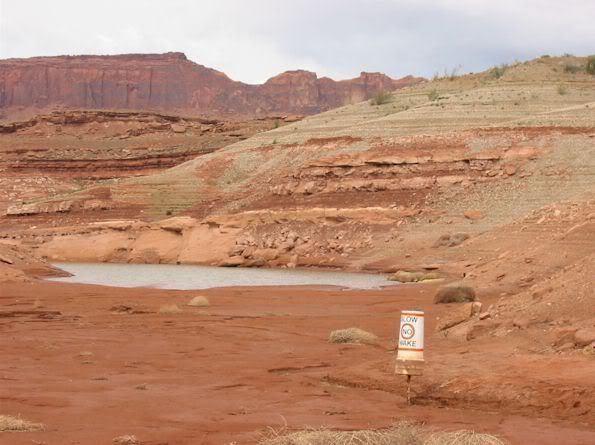 There were hurricanes before Katrina, and Southern California wildfires before Witch Creek, Santiago Canyon, and Running Springs. As those of us who have ever lived in SoCal know, the fall winds can easily turn the brown hillsides into menacing flame.