Category Archives: education

September 8, 2007 Blog Roundup

Today’s Blog Roundup is on the flip. Let me know what I missed.

To subscribe by email, click
here and do what comes naturally
.

The Thing You Should Read
Today

Charlie Brown v. 15%
Doolittle: Various Takes

Health Care

Environment

Basic Fairness (That’s
still an American value, right?  I get so confused.)

All The Rest

The Drive For 2/3: A Movement Rises In The Desert (AD-80)

I’m starting a new series here at Calitics.  We’ve seen with the budget fight and the difficulties funding health care reform that the current balance of power in the Legislature just isn’t cutting it.  This is particularly irksome because they daylight is clearly seen at the end of the tunnel.  5 Assembly seats and just 2 Senate seats would bring 2/3 majorities in those chambers, and yet there is little or no talk within Democratic circles of explicitly going after the vulnerable seats within reach that would give us those numbers.

Well, you shouldn’t wait for others tomorrow to begin what you can do today.  So I’m going to be profiling districts and candidates that can get us to what should be the overriding goal of 2/3 majorities.

We begin today in California’s 80th Assembly District, which largely covers the desert region around Palm Springs, Cathedral City and Indian Wells, but which encompasses Imperial County all the way down to the Mexico border.  This district is currently held by Republican and hot Latina Bonnie Garcia, yet there are a plurality of Democrats there.  This is the most Democratic seat held by a term-limited Republican, though obviously that term limit can be overturned.  But regardless, this seat represents an opportunity.  And I met with the man who can not only deliver that seat, but who can give rise to a new movement of young people of color devoted to improving the lives of their constituents.

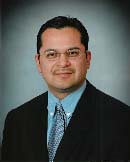
That man is Manuel Pérez.

I met with Manuel at a coffee shop in Indio, a working-class town surrounded by the posh hotels and golf courses of the Palm Springs area.  It really is a haves versus the have-nots story, with resorts fighting with growers for water resources from the Colorado River, to name just one pressure point.  When you move into Imperial County, where the population is 75% Latino and over 65% speak Spanish as their first language, that dichotomy is even more stark.  In this environment, someone with ties to the land is crucial.  And Pérez’ history goes back generations.

Manuel Pérez’ parents were immigrants who met in the fields while chasing the crops they picked for work.  His mother worked 26 years in the fields, despite raising a family.  His father became a veteraño (a veteran of the migrant fields) and worked for the city of Indio on water issues.  Growing up in Coachella and Calexico, Manuel worked in the fields himself over the summers when he wasn’t in school.  His parents understood the importance of education, teaching the values of “service and sacrifice and social justice,” and pushing him to advance as far as he could go.  At an early age, he saw a community of gangs and drugs where his best friend was killed in a drive-by shooting. 

He became the only person in his family to go on to higher education, getting his bachelor’s degree at UC-Riverside (and becoming an organizer on campus).  He had the opportunity to get a master’s degree in Social Policy at Harvard, and took it.  Instead of leaving his community behind, he returned to it, organizing field campaigns throughout the state for candidates and issues like Schools Not Jails.  This is someone who hasn’t waited around for higher office to make a difference in his community; he’s rolled up his sleeves and dived in.  As a director for the Borego Community Health Foundation, he’s created one of the first diabetes resource center in the desert region and has delivered health services to underserved regions.  As a researcher for the California Institute for Rural Studies, he put together a groundbreaking study on women’s reproductive health issues in Imperial County, where women have little opportunities and resources to manage their own health.  With Promotores, he’s part of a group of community-based leaders devoted to teaching  about health issues and making sure people in the community get the facts about programs at their disposal.  As a schoolteacher he started his school’s first ever Chicano Studies program designed to allow students to learn history from their perspective.  With the Eastern Coachella Valley Social Change Collaborative, he identified farm workers living in the area and trained them to be community leaders themselves.  Believe it or not, he’s only 34.

Eventually, Pérez and like-minded community leaders saw the ability to effect social change through policymaking.  So they founded an affiliation called “Raises,” or Roots, a group of people from the community who got their educations elsewhere and then returned to lead.  They decided to work in campaigns and put up candidates.  The first year, Pérez was voted onto the Coachella Valley School Board.  And Eddie Garcia was elected to city council in Coachella.  Then Garcia was voted mayor, and Steve Hernandez was elected to city council.  It went from 1 to 2 to 3 and this year 5 members running for office and seeking social change.  These are community leaders built from the bottom up, infused with the desire and obligation to give back.  In Garcia’s mayoral election, they signed up 15,000 new voters, and criscrossed the region 5 or 6 times, knocking on doors persistently despite being outspent by 3 to 1.  Garcia took 70% of the vote, and so did Pérez.

Manuel Pérez is not only a perfect fit for this district, providing an opportunity to retake this seat and get us closer to 2/3.  He represents a new generation of Hispanic-Americans who are dedicated to working for change from the bottom up.  He would bring to Sacramento a unique set of skills, as someone who can build coalitions and train a group of leaders far into the future.  There are primary candidates on the Democratic side for this seat who appear to be very nice.  I don’t think anyone combines the résumé and the hope for the future more than Manuel Pérez.

He has an ActBlue page and he is worth your support.

(I should add that if anyone knows of a great legislative candidate they’d like me to profile for the Drive for 2/3, please email me at dday-at-calitics-dot-com.)

Privatization Is Always Good!

For example, the levels of corruption and taxpayer ripoffs a private company can pull off is far superior to a government agency!

A San Bernardino County Grand Jury on Tuesday indicted the founder of a charter school network that once was the largest in California, charging him with grand theft and misappropriation of public school funds. A Hesperia city councilman also was indicted.

Charles Steven Cox, 59, who built California Charter Academy into a statewide string of 60 campuses serving more than 10,000 students from Yuba City to Chula Vista, was taken into custody Tuesday and charged with more than 100 counts of misappropriation of charter school funds and theft of nearly $5.5 million.

A 2005 state audit alleged that Cox, as head of the charter academy and also owner of a for-profit company that provided management services to the schools, misused millions of dollars in charter school funds to lavishly pay himself, friends and family and to buy luxuries such as spa services and concert tickets.

The schools were paying the teachers below the state average, too.  More money for the corporation!

The numbers are actually worse, the state is seeking $23 million in misappropriated funds.  Some of the problems with the kind of charter schools Cox created have been addressed; for example, improving oversight and ensuring the corporation is in the same district as the charter school.  But the central issue – a school focusing more on corporate welfare and the balance sheet rather than the needs of students – remains.  To deny that possibility is to deny the existence of human greed.

On the importance of the Dream Act

( – promoted by Brian Leubitz)

I don’t think that many Californians will disagree with this statement: University Education is Critical to the Future of California and Californians.  And, while many may not like it, this state is a state of immigrants. We are all from somewhere else (well, with the exception of the state’s Native-Americans) and are working to move our state forward.  Put those two statements together, and you’ll see why the California Dream Act is so important.

Please see the extended.

The Dream Act doesn’t do anything revolutionary, it simply allows students who graduated from California high schools receive financial aid. These aren’t people flowing over the border just trying to steal the money of good old boys, these are people that have been in the U.S., many since a very young age.  These are people trying to better themselves for the future.  Or, put more properly, this is the future of our state.

Now, the DREAM Act doesn’t answer every question that should be addressed. Heck, even Texas actively promotes its university system within Mexico.  We are doing something that is vital to both California and Mexico by educating talented individuals.  We promote prosperity on both sides of the border, an economic precursor to the end of our immigration problems.

Let’s face facts people, even Hillary Clinton, whose husband worked to pass NAFTA, admits that it hasn’t “been as successful as we expected”. Um, sure, yeah, we can put it gently if we want, but what NAFTA has done is to allow American companies to exploit the relatively cheaper labor of Mexico.  They want to exploit the fact that their workers work in terrible conditions with few, if any, environmental controls.  And we see the results particularly strong in border states. We see pollutants drifting across in our air and our water. We see people desperate to escape the maquiladores, border factories, where they are abused and exploited in conditions that would make Upton Sinclair cringe.

Yet we do this all in the name of globalization without stopping to think how we can balance the boat. If a rising tide really does lift all boats (right Reagan? right Romney? McCain? Thompson?), shouldn’t we be trying to lift all boats, the most talented boats? On both sides of the border?

We must open our universities, our systems of higher learning to all that would help make this state great. That begins with admissions, but we must also include the ability to pay for the privilege.  This is how we work for the future, by building the fortunes of all involved.

Pressure Points on Budget Passage

(And check out KQED’s forum (MP3) with Sens. Perata and Ackerman. – promoted by Brian Leubitz)

No matter what, it does not appear likely that we are going to get a budget (leaving aside the tax breaks for a moment) that is any better than what the Assembly agreed to.  Everybody is now maneuvering to put pressure on the Republicans in the Senate to pass it.  So what are the pressure points?

1) Get Arnold engaged in a productive way.  The man has barely been in town let alone meeting with legislators to speed up the process.  And the last time he actually showed up he set things backwards.  Arnold needs to find a way that he can actually communicate with his fellow Republicans.  Sweet talk them, promise them goodies.  Whatever.  It is his responsibility to get them to play ball and the press needs to hold him accountable.  Matt Jones:

Where’s Gov. Schwarzenegger been during the last two days as lawmakers sweat it out in Sacramento over the state budget impasse? Arnold has been in southern California, not talking about the state budget, but pimping a dead in the water (excuse the pun) plan to build expensive new dams and water systems around the state. (Note: the Governor’s water plan has been rejected in the State Senate).

In fact, yesterday the Governor didn’t even talk about the budget yesterday. And what’s worse, the mainstream press is letting him get away with it. Only one question was asked yesterday by a reporter after the Governor concluded his remarks.

2) Start pressuring individual Republican Senators.  The first target by the Education Coalition is Senator Jeff Denham.  The are holding two press conferences today, one of which is at his district office.

Local education leaders, parents, school board members, and school employees will be joined by Superintendent Jack O’Connell at a news conference today to urge Denham and other Republican state senators to pass the budget. According to a press release from the education coalition, “schools are struggling to plan their budgets … The Senate should make passing a state budget a priority so that our schools and students have the resources they need.”

Denham is considered one of the more moderate members of the Senate Republican Caucus. He also harbors statewide office ambitions (he has opened a campaign account for LG). Being on the wrong side of education groups — as well as law enforcement — could potentially doom his chances of moving up the political ladder.

Is Denham your Senator?  Here is his contact info, should you feel inclined to give him a call and encourage him to stop his obstructionist behavior.  Sacramento 916-651-4012 email form on his Senate website.

Law enforcement groups are gearing up too.  They know that their funding will be on the chopping block, if Republicans get their way.

Anyone else know of any targeting going on? There needs to be two Republicans voting for the budget in order for it to pass.  Tomorrow the Senate takes up the budget again.  Soon the state is going to have a hard time paying its bills and employees will have to get loans instead of paychecks. 

The latest out of the Republicans is that they want to cut a bunch of smaller programs to try and reach their goals.  They still haven’t laid out exactly what they would be.

July 18, 2007 Blog Roundup

Today’s roundup is on the flip. I’m busy today, and there’s not all that many entries, so you’re getting them in no particular order and without headings.

As always, use the comments to let me know what I missed.

Population Shifts and Central Valley Politics

Let’s face it.  This blog – and to an extent, politics in this state in general – is heavily tilted to the large population centers in the Bay Area and Southern California (including Orange County and down to San Diego).  But to continue in this fashion would be shortsighted, because it’s clear that the population patterns are moving away from two all-powerful hubs and toward a more widely spread pattern.  What has been getting most of the ink from the recent study by the state Department of Finance is that the Inland Empire will soon become home to the second-largest county (Riverside) in all of California.  But what has been less remarked upon is the expansion of the Central Valley:

With a new state forecast predicting that California’s population growth will tilt ever more toward the Central Valley, Southern California’s Inland Empire and fast-growing areas around Sacramento, experts say the state’s political center of gravity may shift, too – away from the more urbanized, coastal metropolitan areas that dominate the state’s political and economic life today.

The Central Valley “will clearly gain heft compared with the other metropolitan regions,” said Carol Whiteside, president of the Great Valley Center and the former mayor of Modesto. “It won’t be the baby cousin any more.”

The Central Valley will grow from 10 percent of the state’s population in 2000, to 16 percent of all Californians by 2050. The Bay Area is projected to gain about 3.5 million new residents by 2050, but its share of California’s population will drop to 17 percent, from 20 percent in 2000, an analysis of new state Department of Finance projections shows.

This is something important for political groups to internalize.  The traditional structure of Democratic election efforts has been to raise turnout in LA and SF, and hope to do half-decent everywhere else, and walk away a winner.  That’s not going to work as we go forward.  With 1 in 6 Californians living in places like Modesto and Fresno and Stockton and Bakersfield and Merced and the numerous towns throughout the San Joaquin Valley, Democrats must build and grow their presence outside of the urban metropolises, to a level where they were in the recent past before giving up practically all of that ground to the Republicans.

Some stats on the flip:

Here’s the spread of population in 2000:

Coastal Southern California: 47%
Bay Area: 20%
Central Valley: 10%
Inland Empire: 10%
Other (High Desert, Sierras): 13%

Here’s the projections for 2050:

Coastal Southern California: 39%
Bay Area: 17%
Central Valley: 16%
Inland Empire: 14% (3x the size in 50 years!)
Other (High Desert, Sierras): 14%

The “big 2” go from 67% of the population to 56%.  That’s significant in a statewide election.  It will also likely affect reapportionment, with the Bay Area potentially losing seats in Congress or the state legislature as early as the 2010 Census.

We have to start thinking about this and planning now.  What are the concerns of the Central Valley?  Obviously agriculture and water concerns would weigh heavily, one would think, but the Valley is also urbanizing and developing rapidly.  These aren’t all cow towns anymore; there are at least 5 cities with over 100,000 inhabitants.  The San Joaquin Valley is also the primary oil-producing region in our state.  Culturally this is likely to be a more classically Western libertarian area.

We have a 3-2 deficit among the Congressional delegation in this area.  Dennis Cardoza and Jim Costa are Democrats, and George Radanovich, Kevin McCarthy and Devin Nunes are Republicans.  By 2050 there could be up to 10 seats in this region.  Are Cardoza and Costa helping grow the Democratic brand in the Central Valley?  Are they promoting policies that can help Democrats win?  This is a diverse area as well, with not just Hispanics but lots of Asian and European communities.  How are they being served?

I hope people are asking these questions.  The Central Valley could hold the key to continued Democratic dominance in California.

UPDATE: Here’s an example of a Central Valley issue that simply doesn’t get a lot of attention.  From our friends at the California Teachers Association:

The California Teachers Association is part of a coalition of education groups fighting Assembly Bill 1403 that is winding its way through the legislature. The bill would disrupt implementation of a new law helping schools of greatest need in the Central Valley and take control away from local school boards to help improve student learning in their districts. 

AB 1403 by Assemblyman Juan Arambula, D-Fresno, gives the Fresno and Tulare county superintendents authority over local schools and districts that do not meet the state Academic Performance Index (API) or the federal Adequate Yearly Progress (AYP) requirements.  Currently the local school boards, State Superintendent of Public Instruction and the State Board of Education have these powers. The bill also disrupts new efforts already under way to help 39 schools of greatest need in these counties as part of the Quality Education Investment Act (QEIA). QEIA, sponsored last year by CTA, provides $2.9 billion over seven years to help hundreds of schools across the state with proven intervention reforms such as reducing class sizes, hiring more counselors and providing quality training for teachers and principals.

This is kind of Antonio Villaraigosa’s school takeover effort, ported into the Central Valley.  I would think that Democrats could earn a lot of goodwill among the grassroots in Fresno and Tulare by scuttling this effort to centralize control in the county superintendents.  Maybe a Central Valley reader could give their impression of this issue; to me it seems like a no-brainer to let the schools determine what’s best for their schools and their students.

Nine Digits Away from a Dream

What would you do if your American dream had to be deferred? And how would you respond when you find out that your dream must be deferred because of nine digits? Yep, nine digits would be separating you from your plans, your hopes, your wishes, your future. Doesn’t that seem unfair?

Well, it is. It’s quite unfair for all the young people to work so hard to go to college, yet can’t access any financial aid because they are undocumented immigrants. And even if they can somehow make it through college, they can’t get a job because they don’t have those nine little digits. Even though they came here as children, and even though they only remember living here, they are punished for something they had no control over.

So what can be done about this injustice? Follow me after the flip for more…

A couple of days ago, I met this guy named Ricardo. He seemed like a nice guy, and like a typical young professional in Orange County who did everything he was supposed to do to succeed. Yet for some reason, he can’t.

Ricardo did everything he was supposed to do in high school. He excelled in his classes, and he went on to college. He now has a bachelor’s degree in molecular biology. He has a master’s in health policy. He wants to serve people in the medical profession. However, he can’t.

So why can’t Ricardo get a job? He doesn’t have those nine digits. His parents brought him here with them some nineteen years ago, and they all came here undocumented. He was only eight years old. He hardly even remembers Mexico. He’s spent the vast majority of his life in the US, and this nation is the nation he calls home.

Ricardo never sought to break the law. He doesn’t gang-bang. He doesn’t deal drugs. He’s not some “criminal alien”. He’s just a smart guy who did everything right and went to school and planned to do something good with his life. So why must he be “punished” for something that he had no control over.

Unfortunately, Ricardo had no opportunity to receive any financial aid. He started school before AB 540 became the law of the land in California in 2003. And since he didn’t have those nine digits, he had to struggle just to afford his college tuition.

But even now that he’s finished school, Ricardo still has to struggle. He can’t get a job. He still doesn’t have those nine digits. He’s at his wit’s end. Without the nine digits, all his dreams must be put on hold indefinitely.

So what can be done? Ricardo’s just one person who’s been unfairly “punished” because of his immigration status. These young people didn’t make a “choice to come here illegally”. They didn’t just decide to “break the law”. They came here as kids, yet they’re being punished like adult criminals. What can be done to fix this?

Obviously, AB 540 isn’t enough. This only helps immigrant students in California, and it only helps these students go to school. However, it doesn’t help them get jobs after school. That’s why we need the DREAM Act.

So what would the DREAM Act do? Basically, it would give a path to legalization for people who brought to the US undocumented as children by their parents. In order to qualify, they need proof of having arrived in the United States before reaching 16 years of age ,as well as proof of residence in the US for a least five consecutive years since their date of arrival. Oh yes, and they must have graduated from an American High School, or obtained a GED.  Oh, and they must also demonstrate “good moral character,” which is defined as the absence of a significant criminal record (or any drug charges whatsoever).

So what exactly would be done? Here’s a quick rundown from the Wiki entry:

Immigrants who meet the above requirements would be eligible to apply for a temporary six (6) year “conditional” residence permit which would allow them to live legally in the United States, obtain driver’s licenses, attend college as in-state residents, work legally (including obtaining a social security number), and apply for special travel documents which would allow for travel outside of the country for limited amounts of time.

During the six years of conditional status, the eligible immmigrant would be required to either (1) graduate from a two-year community college, (2) complete at least two years towards a 4-year degree, or (3) serve two years in the U.S. military. After the six year period, an immigrant who meets at least one of these three conditions would be eligible to apply for legal permanent resident (green card) status. During their temporary time, immigrants would not be eligible for federal higher education grants such as Pell grants, though they would be able to apply for student loans and work study.

There, now doesn’t that sound fair? Doesn’t this do justice for people like Ricardo who never sought to “break the law”, but just want a chance to do something good with their lives? Don’t they have a right to pursue their dreams? Oh yes, and shouldn’t they finally just have a chance to get those darn nine digits so that they can move on with their lives? Isn’t it only in the best interest of the greater society that they can be productive forces in our society?

So would you like to find out more about the stories of these immigrant students, the story behind the DREAM Act, and why we shouldn’t stereotype immigrants? If you’re in Orange County, you can watch a special play, “9ine Digits Away from My Dream”. You can hear more about Ricardo’s story, as well as stories from other immigrant students in Orange County who are struggling because of an unfair system. And yes, you can gain some more understanding, and find out what you can do to change this.

And no matter where you live, you can urge House Speaker Nancy Pelosi (D-San Francisco) to get the DREAM Act passed in the House. Isn’t it time that we stop deferring these young people’s dreams? Should we allow nine digits to get in the way of these people’s dreams of better lives?

What’s the Real Purpose of This Tax Hike in Santa Ana?

It’s very rare when I actually agree with The OC Register’s editorial page, but today happens to be one of those rare occasions. Read this and weep:

As the Register reported, the city [of Santa Ana] hired a Sacramento-based polling firm in March in the hopes that residents would tell pollsters that they want higher taxes to pay to fix Santa Ana’s poorly maintained, pothole-filled roads. To the officials’ dismay, residents overwhelmingly opposed the idea of paying higher taxes for roadwork. But officials saw an opportunity in another question, in which residents said they would give “high priority” to higher taxes to deal with gang prevention.

So they commissioned another poll. And lo and behold, they got what they wanted! People were willing to pay more taxes to “pay for more police officers to fight crime”. So now, we’re getting the “gang-fighting tax” in Santa Ana. But is this really what city officials are telling us that it is?

Follow me after the flip for more…

Here’s some more of today’s Register editorial:

Had the city really believed that there is a desperate need for more police, then it would have commissioned a poll that focused on police needs. Instead, it commissioned the poll based on its presumption that roadwork was the prime need. Apparently, city officials will raise taxes for any and all purposes, which is easier than doing what 84 percent of respondents told the city-hired pollsters: that “spending tax money efficiently” is a high priority.

Now to be honest, I disagree with what The Register says later on about taxes being evil, blah, blah, blah. I just don’t buy Howard Jarvis talking points. That’s not the issue for me.

What concerns me here is that the city would mislead residents about the “need” for this tax. First, they said that it’s about fixing our streets. And now, they’re telling us that it’s really to fight gang violence. So which one is it? Or is it really neither?

Is it really meant to pay for subsidies that we can’t afford and that don’t work for us? Is it really to pay for these bloated salaries for these ineffective city administrators? How are we supposed to accept paying more taxes to the city if we can’t even trust the city to be honest with us?

Now don’t get me wrong. I don’t want to see any more gang violence. I don’t want to see any more decrepit streets. I don’t want to see any more dearth of open space in this town. I don’t want to see any more libraries closed.

But if this tax were really about these things, then why can’t the city just tell us that? And if this really weren’t just a reward to a bunch of incompetent jerks who have failed us on all these issues, then why can’t the city just tell us that? How are we supposed to entrust these people with more of our tax money when they can’t even be honest about why they want more of it?

Chris Reed Misses the Point on Teachers’ Pensions

Last week, we got some good news regarding the pension fund for our state’s teachers. In 2004, the long-term deficit was projected to be $24.2 billion. Today, the long-term deficit is projected to be $19.6 billion. It’s not quite as good as we want it, but it’s getting better.

So how did our favorite right-wing commentator who always misses the point respond? Oh, Chris Reed just looks for a way to tie this to “the public employee unions’ master-puppet relationship with Democratic lawmakers“. Huh?

Follow me after the flip for more…

So what exactly is Chris Reed angry about? I guess this:

Last June, three state Senate Democrats — Don Perata, Debra Bowen and Gil Cedillo — killed the governor’s nomination of David Crane, a smart, well-regarded San Francisco financier, to the California State Teachers Retirement System board. Crane’s sin? “The three Democrats on the five-member Senate (Rules Committee) agreed that Crane seemed too concerned about the burden of pension shortfalls on taxpayers,” according to a published report.

Perata, Bowen and Cedillo’s open declaration of allegiance to the California Teachers Association over Californians in general showed anew that public employee unions have a master-puppet relationship with Democratic lawmakers — and that taxpayers are being and will continue to be brutalized as a result.

Wait, so how exactly did the Democratic lawmakers act as “puppets” to the “masters” at the public employee unions? And what’s so horrifying about the state teachers’ pension fund? Take a look at this article from The Sacramento Bee last week, and try to explain the “crisis”.

Surging stock markets and three straight years of strong investment returns have pared billions from a long-term pension shortfall plaguing the California State Teachers’ Retirement System in recent years, but it’s not enough.

The state, school districts and teachers still will be forced to dig deeper into their pocketbooks to erase a projected $19.6 billion gap over the next three decades, according to a new report for the nation’s second-largest public fund. […]

The CalSTRS analysis, prepared by the actuarial consulting firm Milliman, shows the giant fund’s financial outlook improved slightly at the end of fiscal year 2006 as the nation’s second-largest public fund continued to rack up double-digit percentage annual investment gains, including a 13.2 percent return in ’06.

The results have cut the long-term deficit to $19.6 billion, compared with $20.6 billion in 2005. That’s an improvement from a $24.2 billion funding gap in 2004.

Milliman said CalSTRS, with nearly 800,000 members, has enough assets to cover 87 percent of its pension obligations decades from now — up from an 82 percent rate in 2003. By comparison, the average for 125 state retirement systems is 88 percent, according to a 2007 report by Wilshire Consulting.

OK, so now the pension fund has enough assets to cover 87% of our teachers’ pension needs for the next few decades. We’re not quite fully funded yet, but we’re getting better. And apparently, there’s already a proposal to fill this gap. Again, from Sac Bee:

The consultant’s report said CalSTRS needs a 3.3 percent boost in annual pension contributions to wipe out the deficit. Currently, school districts pay 8.25 percent of payroll toward teacher pensions, while the state puts in 2 percent and teachers contribute 8 percent of their pay.

In December, trustees backed a legislative measure to increase contribution rates in 2009 while leaving benefits intact. The proposal calls for raising the teachers’ rate to 8.5 percent while gradually increasing the state’s portion to a maximum of 3.25 percent. The school district contribution would slowly rise and be capped at 13 percent.

OK, so what’s the big deal? The teachers pay a little more. The school districts pay a little more. The state pays a little more. And in the end, the pension fund is fully funded. Under the current proposal by the pension fund trustees, everyone chips in a little more (including the teachers themselves) to ensure that our teachers can afford to stay alive after they retire.

So how did Chris Reed respond?

The story noted that CalSTRS still had a projected long-term $20 billion shortfall in paying for the pension benefits of retired teachers. How did the CalSTRS board propose to deal with this huge unfunded liability? Not by trimming benefits, an approach it flatly rejected. By waterboarding taxpayers.

And what does he want to do about this? Go back to whining about one of Arnold’s good buddies from SF not making the pension trustee board. Oh yes, and if one really wants to talk about “master-puppet relationships”, look at this. David Crane is a venture capitalist who served on Arnold’s transition team in 2003. And Arnold placed him on his “Commission for Jobs and Economic Growth“. And he’s part of Arnold’s inner circle as an economic adviser. And even though David Crane calls himself a “Democrat”, he boasts of his admiration of Milton Friedman.

And Chris Reed is really surprised that Senate Democrats won’t nominate someone adamantly opposes “non-market deals” and who calls public pension benefits for workers who serve the public “special privileges”? Give me a break!

So once again, Chris Reed misses the point. The teachers’ pension fund isn’t quite doing as well as we’d like it to, but it’s doing better than it had been just five years ago. And now, the pension trustee board has proposed a solution to the remaining problem. However, Chris Reed doesn’t like a solution. So now, he’s criticizing the State Senate Democrats for rejecting a radical Friedmanite (who despite being a “Democrat”, is VERY CLOSE to Arnold) to serve on the pension board. Can someone please explain Chris Reed’s distorted “logic” to me?