I have the greatest respect for Barbara Boxer and the work she’s doing on the issue of global warming. However, I think it’s a shortsighted approach for working to pass a bill that she thinks George Bush can sign, a climate change bill that would set up a cap and trade system and just give carbon credits away to polluting industries. There’s been a simmering battle between environmental groups on this bill, and now it’s exploded into the open, with the Sierra Club coming out against the bill, known as Lieberman-Warner (which should tell you something).
Fast-forward to present day: the carbon industries are lobbying to get a deal done this year that would give away carbon permits free of charge to existing polluters — bribing the sluggish, and slowing down innovation. And politicians are telling us that while it would be better to auction these permits and make polluters pay for putting carbon dioxide into our atmosphere, creating that market unfortunately gets in the way of the politics.
We are being urged to compromise — to put a system in place quickly, even if it is the wrong system. Given that we only have one chance to get this right before it’s too late, our top priority must be to make sure that we do not settle prematurely and sign a weak bill into law in the name of doing something about global warming. With momentum for strong action and a friendlier Congress and White House building every day, it’s no coincidence that some wish to settle their accounts now.
This will tie the hands of the Presidential candidates on the Democratic side, who have far better proposals for their cap and trade system, including selling the carbon credits at a 100% auction, using the funds to promote green energy and research for renewables. It’s the wrong bill at the wrong time.
over…
I know that Sen. Boxer wants to use her status as the head of the Environment Committee to push this compromise bill forward. But the political calculus next year could be excellent for a real bill with real teeth, and Boxer would be leaving that on the table. As I mentioned earlier this week on my home site, Sens. Obama and Clinton are co-sponsors of this Lieberman-Warner bill, which was initially authored by John McCain, and so this has the potential to totally take global warming as an issue off the table for the 2008 elections. They ought to take their names off the bill, but it would be better for involved if this doesn’t pass. As Matt Stoller writes:
…it’s the huge number of new liberal anti-carbon energy voters out there that are going to allow the public to get a sustainable deal on climate change next Congress. There’s some evidence that Obama might make global warming his highest priority, having promised to begin negotiating a new Kyoto-style treaty even before taking office.
All of this is excellent and game-changing news that we’ve seen happen in the last week or so. As a reminder, here’s what Boxer said just two weeks ago about Friends of the Earth, which has waged a campaign called ‘Fix it or Ditch it’ about the massive Lieberman-Warner bill to subsidize polluting industries.
“They’re sort of the defeatist group out there,” she said. “They’ve been defeatists from day one. And it’s unfortunate. They’re isolated among the environmental groups.”
This nasty slur, while not true at the time (Greenpeace was opposing the bill), is now silly. At least one big green group has moved in response to Wynn’s loss to get a better deal, and the business right, the coal producers, the nuclear industry, and the oil guys know they will have to deal soon. The Sierra Club and Friends of the Earth have said that we must work on global warming, but that it must be done smart and sustainably.
We’ve been down this road before. The rising cost of gasoline and worries about peak oil led everyone to go running toward biofuels in a desire to “just do something,” and now we’re learning that the production of biofuels costs more energy than the savings from biofuels themselves. So now we’ve created this giant windfall for agribusiness, and nobody wants to reverse the ship because it’d be politically unpopular to enact what some would see as an “anti-environmental” initiative.
A “deal” on a bad cap and trade bill would have the same effect. It would lock in a giveaway to polluters on the order of trillions, and make it very difficult for the next President to do anything about it. If you care about the environment, I think you need to let Sen. Boxer know that only a real climate change bill that hits the necessary targets is sufficient. Otherwise, she has to walk away from this.
Back in November I wrote about Santa Cruz County’s “wrong way” proposal to pass a tax measure to spend $600 million on widening the Highway 1 freeway but would have delivered virtually nothing for local passenger rail, despite the fact that the infrastructure to provide rail already exists.
Happily, wiser heads appear to have prevailed. The county’s Regional Transportation Commission voted to kill the plan yesterday, meaning it won’t go to the ballot in November as originally intended. Erosion of public support was cited as the reason for the decision. The county’s Business Council withdrew its support and, more importantly, its promise to fund the plan’s campaign; bicycle and transit supporters objected to the inadequate rail funding; the Sierra Club criticized the road’s effect on climate change; and local Republicans demanded that the freeway widening alone be funded.
I predicted that the plan would have failed at the ballot box, and I’m not surprised that it didn’t even make it that far. The tide is beginning to turn against using freeways to solve our transportation problems. Last November Seattle voters rejected a plan that would have added 160 miles of new freeway lanes, even though they have some of the nation’s worst traffic (outside of California, of course). And this week the Coastal Commission rejected a toll road through San Onofre State Beach, rightly choosing to protect the environment over continuing our outdated reliance on highway transportation.
By refusing to waste precious tax dollars on freeway lanes, Santa Cruz County has taken the first step toward solving its transportation issues in a sustainable and responsible way. This gives county leaders and activists time to educate the public about the need for passenger rail, and come back to voters in a few years with a plan that will actually provide for the county’s needs, instead of foolishly trying to pretend that the methods of the 20th century can continue.
Hopefully we in Monterey County will follow Santa Cruz’ lead – transportation officials here are proposing a similar roads-focused tax plan, having stripped $90 million to bring Caltrain to Salinas. Public hearings are going on next week, so if you’re in Monterey County, speak out in favor of sustainable transportation, and against sticking our heads in the sand on climate change and peak oil!
Today the state of California joined with 15 others to sue the federal government over the EPA’s decision to deny the granting of a waiver to the state to regulate their own greenhouse gas emissions under Fran Pavley’s 2004 tailpipe law. The odds are absolutely in favor of California winning this lawsuit. Never since the passage of the Clean Air Act in 1970 has the EPA ever denied such a waiver, and the legal justifications are extremely cloudy. However, the government has succeeded in delaying implementation, which is really all they’ve set out to do. So expect this to be a long and drawn-out fight that will probably not be resolved until after the choosing of a new President in November.
The Environmental Protection Agency on Thursday signaled it is prepared to comply with a congressional request for all documents – including communications with the White House – concerning its decision to block California from imposing limits on greenhouse gases.
The EPA’s general counsel directed agency employees in a memo to preserve and produce all documents related to the decision including any opposing views and communications between senior EPA officials and the White House, including Vice President Dick Cheney’s office.
The documents should include “any records presenting options, recommendations, pros and cons, legal issues or risks, (or) political implications,” said the all-hands memo from EPA General Counsel Roger Martella Jr.
They’re saying that now, of course, but David Addington hasn’t gotten his hands on the memo to use his red pen.
The presiding committee in the Congress on this one is Henry Waxman’s House Oversight Committee.
Happy New Year, Fourthbranch. We got you Henry Waxman.
We all know that the world in warming. In fact, it is warming much faster that originally predicted. We can watch reports coming from the UN Framework Convention on Climate Change in Bali.
So why are the political lists so silent?
I am of the opinion that most politicians do not want to hold their own record up to public scrutiny. LA Mayor Villatgairosa would fight Climate Change with a Million Trees and never asks where the water to grow those trees in the desert would come from.
Just to pick on a single Democratic nominee (The Republicans are hopeless on this issue except for McCain, and he is still pretty bad.) I would cite Barack Obama’s saving the world with corn based ethanol. It is not about anything other than winning votes in Iowa, to hell with the planet.
I could do the same with the rest of the Democratic Senate who voted 86-8 this morning on a new energy bill. They did not even have to call back Biden, Clinton, Dodd and Obama to win this vote, as they have compromised away too much to gain such wide support. Even then, one of the 8 was a Democrat from Michigan… it figures.
It seems that the real action is cooling off and a lot of enviros are getting very frustrated.
I grant the bill had some good things: improved CAFE standards for example. If Pelosi delivered that, good for her. But in essence, this bill is little better than the Bush positions in Bali.
I am going to start posting the press releases of Green Party Presidential Candidate, Kent Mesplay, at California Greening. At least, he is a scientist (PhD in BioMechanical Engineering) and his current job (for the San Diego Air Quality Control Board) puts him right in the middle of understanding what is happening.
As anyone who’s had the misfortune to be stuck in a traffic jam on Highway 1 in Santa Cruz County knows, there’s a major traffic problem on the northern end of Monterey Bay. High housing costs in Santa Cruz have spurred growth over in Watsonville, where homes are (relatively) more affordable. When combined with the job engine of Silicon Valley just over the hill, this means there’s a LOT of traffic on Highway 1.
So what should be done? Widen the freeway? Take advantage of the rail line that connects Watsonville to Santa Cruz to provide commuter rail and take the pressure off of Highway 1?
Highway 1 widening has been very contentious – a 2004 plan to widen the freeway was shot down by voters – and so it is somewhat surprising to see that a Santa Cruz County transportation tax force has suggested trying again in November 2008, with another 1/2 cent sales tax that would largely go toward an additional freeway lane and only a pittance for rail.
Environmentalists and transit advocates, led by Friends of the Rail Trail and former Santa Cruz mayor and Democratic candidate for AD-27 (should Prop 93 fail) Emily Reilly, have denounced the proposal and vowed to fight for transportation alternatives.
What I want to do here is explain why they are right, why Santa Cruz needs to seize this opportunity to lead the state into a more sustainable and effective transportation future. Instead of trying in vain to keep the 20th century alive, we need to realize our limits and embrace a more sensible vision for the 21st century.
In November 2004 a 1/2 cent sales tax was put to voters that would have provided some funding for public transit, but was largely about widening Highway 1 with an additional lane between Watsonville and Santa Cruz. The measure only got 43% support, as a combination of anti-tax, anti-development, and anti-roads voters rejected it. Although the county transportation commission believes voters will support this, it’s not clear this will fare any better now than it did in 2004.
This isn’t just bad politics. It’s an example of completely misplaced priorities. Santa Cruz has been trying to develop a commuter rail line to connect to Watsonville, paralleling Highway 1 and potentially clearing up the traffic problem without adding new freeway lanes. To do this, the county needs to buy out the Union Pacific line that runs alongside Highway 1, an effort that has been stalled in negotiations for several years, as the county believes UP is asking too high a price given the renovations that will be needed to make the route viable for passenger rail.
“Half of the population in Santa Cruz County live within a mile of the rail corridor,” says Micah Posner, co-founder and board member of Friends of the Rail Trail.
“Two thirds of all trips in Santa Cruz are under five miles and one-third are under three miles,” Posner continues. “It’s amazing just in terms of global warming alone that a rail trail has the potential to solve all our problems.”
Hart summed up Santa Cruz County’s readiness for public rail with three Cs: “concentration, combination and culture.”
He argued that the concentration of the county’s 250,000 residents around the rail corridor overcomes the overall population number, which is regarded by opponents of passenger service as too low for a viable service. “Combination” stood for his company’s proposal to continue freight service – mostly for the Cemex plant in Davenport – by creating a system that wouldn’t necessitate running freight only at night. “The overhead, logistics, insurance and planning all need one organization running it to be efficient enough,” Hart said.
Hart’s final key, culture, proved he knew his audience. Having already received applause for his statement that Sierra Railroad operates its trains only with biodiesel, he said, “The Santa Cruz County mindset is, if we can help the environment by using a train, we will. When you figure the overall cost benefit, you can’t just figure the people riding the train instead of their cars. You also need to take into account the thousands of people who will walk or ride their bikes to get where they need to go.”
Left unsaid is the historical connection. Both Monterey and Santa Cruz were products of passenger railroads. As anyone who’s been to the Santa Cruz Boardwalk knows, it is situated right alongside the rail line, which carried weekend visitors down from San Francisco and provided the transportation lifeline that made Santa Cruz viable. Same for us in Monterey – the Del Monte Express was critical in bringing visitors to one of the state’s first tourist destinations, as well as bringing supplies to town and providing regional business access to market.
For most Californians, rail stopped being a vital part of life after World War II, when cheap oil made us all believe that personal automobiles and freeways, not trains, would solve our needs. We let our excellent rail transportation network fall apart – from the Pacific Electric cars in SoCal to the end of the Del Monte Express in 1971. The 20th century California Dream emphasized cars and cars alone; the Beach Boys never sang about trains.
Clearly the desire for new kinds of transportation is there. So is the awareness of climate change and the need to move away from global warming emissions that highway projects produce, as explained by Seattle’s Sightline Institute.
But roads supporters in Santa Cruz County prefer to ignore all of this. When the transportation task force approved the Highway 1 widening tax proposal, they also rejected a resolution that would have required an overall reduction in carbon emissions and that each project funded had to be carbon neutral – a rejection Emily Reilly rightly found to be “shocking.”
A small but vocal group of residents in Capitola and Aptos, which lie along the rail line, also oppose the passenger rail plan, concerned that it would hurt their property values. Friends of the Rail Trail believe that in fact, a combined rail line and bike/walk trail would help property values, as well as keeping local economies afloat and easing traffic congestion.
Ultimately, the opposition of these few homeowners and the transportation task force to a rail solution is a sign that they still believe, against all evidence, that the 20th century can continue. Maybe Highway 1 widening would have made sense in the 1980s or 1990s. Not now. With scarce public revenues, soaring gas prices, and the need to get serious about climate change, spending $300 million to widen a freeway is an insane waste of money. Santa Cruz County needs to instead embrace a more sensible future – a passenger rail future.
And in any case, the 1/2 cent sales tax for a freeway project is doomed to fail. Santa Cruz saw this in 2004. Earlier this month Seattle rejected a massive roads and transit project when anti-tax activists and those opposed to 180 miles of new roads combined to sink the plan. In 2004 Denver voters approved a massive rail and transit only plan, FasTracks, and this year Charlotte voters gave 70% approval to a light rail plan. Will Santa Cruz be left behind?
Bill Richardson is goal-oriented, assertive and confident. He has served as a Congressman, U.S. Ambassador to the United Nations, Secretary of Energy and is in his second term as Governor of New Mexico after a landslide re-election victory in November 2006.
Here are five of many reasons why I believe Richardson possesses the experience, vision and leadership skills to be a great President:
1. A Bright Vision for America
2. An Ironclad Promise to Promptly End the U.S. Occupation of Iraq
3. A Bold Agenda To Address The Pressing Challenges Facing Our Nation and Planet
4. The White House and A Landslide Victory for Democrats Nationwide in 2008
5. Comprehensive Immigration Reform In Accordance With the Values Upon Which Our Country Was Founded
This was originally posted on MyDD as part of its candidate series. I am not part of the Richardson campaign.
1. A Bright Vision for America
Richardson believes in using government to improve the lives of people and affect change in a positive way. He takes a practical approach to governing, focusing on solutions to problems rather than ideology. His vision for America is to be “a nation of opportunity and prosperity for all and guaranteeing real security for all our people.”
Earlier this year, in a speech to the Arab American Institute in April 2007, Richardson stated:
Here at home, we must adhere and protect the words, spirit and life of our Constitution for America is not just a country, it is a belief. A belief in a right to freedom of speech and freedom of religion. A belief that every man and woman has the right to elect their government and a belief in freedom, justice and equality. America is the land of opportunity, but we have much to do to ensure that America is the land of equality of opportunity.
To get an insight into Richardson the person, I suggest you watch the following videos. The first features the person who knows him best, Barbara Richardson, his wife of thirty-five years:
The second is a profile of Richardson by Charles Gibson of ABC News:
2. An Ironclad Promise to Promptly End the U.S. Occupation of Iraq
Rocky Anderson, human rights activist and the mayor of Salt Lake City, Utah, has endorsed Richardson. In an essay in the Nation, Anderson states:
If ending the tragic, self-destructive occupation of Iraq is indeed a line-in-the-sand issue, only Bill Richardson stands out among the leading candidates as the choice for President.
While Hillary Clinton, Barack Obama and John Edwards refuse to pledge an end to the occupation, even by 2013, Bill Richardson commits clearly to pulling out all US troops. He recognizes that the occupation is widely despised, aiding in the recruitment of terrorists beyond Osama bin Laden’s wildest dreams.
Richardson’s consistent message on the necessity for a prompt and complete withdrawal from Iraq is resonating with Iowa voters. This week STAR*PAC (Stop the Arms Race Political Action Committee of Iowa) endorsed Richardson. Harold Wells, Chair of STAR*PAC, explained why:
Governor Richardson has consistently promised to get all the troops out of Iraq within one year and probably as soon as six months. He promises he will leave no residual troops behind. And his message is the same wherever he speaks — to a military audience in Georgetown, a New Hampshire town meeting, in a rural Iowa community or at STAR*PAC’s candidate forum with the Governor in August. Three generals — General Volney Warner, General William Odom and Lt. General Robert Gard — support Richardson’s plans to get the troops out of Iraq.
Richardson observes that a complete withdrawal gives us the leverage we now lack to get the warring factions to compromise, while our presence fuels the insurgency. In an Op Ed published in the Washington Post entitled “Why We Should Exit Iraq Now,” Richardson wrote:
So long as American troops are in Iraq, reconciliation among Iraqi factions is postponed. Leaving forces there enables the Iraqis to delay taking the necessary steps to end the violence. And it prevents us from using diplomacy to bring in other nations to help stabilize and rebuild the country.
The presence of American forces in Iraq weakens us in the war against al-Qaeda. It endows the anti-American propaganda of those who portray us as occupiers plundering Iraq’s oil and repressing Muslims. The day we leave, this myth collapses, and the Iraqis will drive foreign jihadists out of their country.
To hear Richardson explain his plan for Iraq, the imperative for all of our troops to leave Iraq as well as discussing the approach the U.S. should take on Iran through seeking common ground, listen to the following interview on News Hour with Jim Lehrer:
3. A Bold Agenda To Address The Pressing Challenges Facing Our Nation and Planet
Being the sole Democratic candidate for President with executive branch experience, voters can evaluate Richardson from the unique stand point of an actual record of implementing policy on key issues, not merely the speeches he has given. Each year, the Conservation Voters of New Mexico releases a Legislative Scorecard breaking down the votes on key bills impacting the environment. The CVNM also rates the Governor. This year, the CVNM gave Richardson an “A”.
Richardson recognizes that the threats to our environment extend beyond our borders:
A hungry world will also hunger for scapegoats. A thirsty world will thirst for revenge. A world in crisis will be a world of anger and violence and terrorism.
He has set forth a global agenda to address the welfare of the human race, linking climate change, poverty, international disease and war.
On the critical issue of climate change, Richardson has offered the most aggressive plan of any candidate, proposing to cut greenhouse gas emissions by 90% by 2050. In a book published this week, entitled In LEADING BY EXAMPLE: How We Can Inspire an Energy and Security Revolution, Richardson argues that the U.S. should start a ten-year program immediately to eliminate its dependence on overseas oil and address global warming.
Can you believe this? Bill Richardson has written a truly exciting book. This is the book we’ve been waiting for – the one that takes us from the stage of awareness that Al Gore produced two years ago to the society that takes control of destiny and begins to live in global wealth, health and security.
Richardson begins by describing the existing current lag in leadership. America needs to reposition its image in the spirit that it has long held. Sacrifice and inspiration are essential to that image. With the image and presence of a compassionate America, nations will succeed in lifting themselves from tyranny, depression, illness and tragedy. We cannot afford to confuse our image as a people – that image that produces inspiration through compassion – with one that will overrun other nations to satisfy an addiction for oil.
4. The White House and A Landslide Victory for Democrats Nationwide in 2008
I written previously that Richardson will be Karl Rove’s worst nightmare. With Richardson at the head of the Democratic ticket, no longer would the fate of the Democratic candidate rise or fall on the outcome of one state.
We would start with the same states carried by Senator Kerry in 2004. Add in Richardson’s Latino heritage and Western values as well as economic policies and stance on 2nd Amendment issues, Richardson becomes the ideal Democratic candidate to convert Red states to Blue.
University of Virginia political science professor Larry Sabato recently made the same argument in an interview:
He is unbeatable. It is amazing the Democrats haven’t recognized that. Republicans will tell you privately that if the Democrats nominate Bill Richardson the election is over. They know they will lose to Bill Richardson. He is perfectly positioned.
Now contrast Richardson’s appeal with the current front runner and most well known Democratic politician in America. Even though opinion polls show most Americans believe our country is headed in the wrong direction and prefer a Democrat to succeed Bush, when Clinton is matched up against Giuliani the race is a dead heat. Why? More people rate Clinton negative on the quality of honesty than positive. The Democrats will win in a landslide in 2008, if Richardson is at the top of the ticket.
5. Comprehensive Immigration Reform In Accordance With the Values Upon Which Our Country Was Founded
Before the campaign commenced, Richardson called for comprehensive immigration reform that strengthens our borders while also providing a path to citizenship for the estimated 12 million illegal immigrants in the U.S.
Last year, Biden, Clinton, Dodd and Obama caved into the anti-immigrant pressure groups in voting for a massive, 700-mile wall along the U.S.-Mexican border. Richardson has repeatedly called the fence ineffective and a terrible symbol for America. In his view, it also creates a disincentive for Mexico to cooperate with the U.S. – which is essential for stopping illegal immigration.
On the current hot issue of the day – drivers’ licenses for illegal immigrants – Dodd and Edwards are now talking like Republicans. Edwards flip on this issue is especially revealing. Here is a candidate that time and time again has proclaimed, “We are past the time for cautious, poll-driven politics.” Yet, Edwards has seen the polls and changed his position to that which serves his short term political advantage.
Richardson doesn’t play the anti-immigrant card. He signed legislation in New Mexico that gave licenses to all persons without proof of citizenship. When this topic was raised in a recent interview, Richardson commented:
MATTHEWS: Governor, what would you have said to that same question? Were you on base with regard to whether we should give, at the state level, driver’s licenses to the people in the country illegally?
RICHARDSON: I would have said yes. You know, four years ago, my legislature sent me a bill to give driver’s licenses to illegal immigrants. I signed it, because my law enforcement people asked me to do it. They said it was a matter of public safety, that we want safe drivers on the roads. Insurance-uninsured drivers has gone down in New Mexico, from 33 percent to 11 percent, since I signed that bill. It’s a matter of being safe on the highways and also knowing where they are. I think Senator Clinton should have just said yes. It sounded like she agreed with the governor. She did fumble that.
To hear Richardson discuss his plan on immigration, listen to the above video clip, the interview on News Hour with Jim Lehrer.
————
Finally, I’d like to comment on the issue of the day – the confirmation vote on Michael Mukasey. The vote on Mukasey was a vote the Dems in the Senate could have won if they showed a spine. Mukasey needed 51 votes to be confirmed. Biden, Dodd, Clinton and Obama were all missing in action.
Richardson spoke out first against Mukasey. On October 19th, prior to any statements by the other Presidential candidates, Richardson stepped forward and criticized Mukasey for refusing to say whether waterboarding is torture:
“Waterboarding is torture, and anyone who is unwilling to identify it as such is not qualified to be the chief legal officer of the United States of America. If I were in the U.S. Senate, I would vote against Mukasey unless he denounces such specific forms of torture.
“Torture does not work. Mistreatment backfires and destroys our international leadership, as we saw with Abu Ghraib. Torture also endangers our own troops. The standards we adopt may well be what our own troops are subjected to.
“Anytime one makes a person think he or she is being executed, the very nature of waterboarding, it obviously is a violation of the U.S. Constitution, international law, and basic human decency. . .
“If another nation engaged in waterboarding against American citizens, we would denounce that country and call the practice barbaric, and rightly so.
“We must stand against torture without equivocation, without compromise, and without exception. Torture is a violation of everything we stand for as Americans and as human beings.”
Shame on the Democrats that voted for Mukasey and those that didn’t show up at all. This was not a vote on one person. It was a vote on whether the U.S. government or agents acting for our government may commit torture in the name of national security.
Persons without a moral compass should not hold political power. And no surprise here – people under torture say what they believe their interrogators want them to say. The result is we get false and misleading information when we practice torture.
The results can be devastating. We went to war with Iraq in part because of intelligence based on the torture. I suggest everyone read Tim Weiner’s Legacy of Ashes. It is a fascinating history of the CIA. At page 487, he states:
[CIA Director George] Tenet provided his own grim warnings in a secret hearing before the Senate intelligence committee on September 17: ‘Iraq provided al Qaeda with various kinds of training – combat, bomb-making, and chemical, biological, radiological and nucler.’ He based that statement on the confessions of a single source – Ibn al-Shakh al-Libi, a fringe player who had been beaten stuffed in a two-foot-square box for seventeen hours, and threatened with prolonged torture. The prisoner had recanted after the threat of torture receded. Tenet did not correct the record.
When I wrote the earlier piece today about California suing the EPA over granting a waiver on tailpipe emissions, I noticed a lot of comments in the linked article from denialists, touting that “The head of the Weather Channel thinks global warming is a scam… how could it be true if the founder of the Weather Channel doesn’t believe in it?” This appears to be a new denialist talking point. John Coleman, the founder in question, wrote a piece for a global warming skeptic site calling it a scam. It got the full Drudge treatment, and wingnuts are engaging in a link-fest.
John Coleman may be the “founder of the Weather Channel,” but he’s actually just a hack weatherman in San Diego:
John Coleman has been a TV weatherman since he was a freshman in college in 1953 and TV was brand new. He still loves predicting the weather and relating to the television viewers. “I also love working at KUSI NEWS”, he adds. “It is a rare thing; a locally owned and managed TV station. And, there are dozens of wonderful people who work here.”
John has predicted and shoveled his share of snow. He has been a TV weatherman in Champaign, Peoria and Chicago, Illinois; Omaha, Nebraska, Milwaukee, Wisconsin and New York City. For seven years he was the weatherman on “Good Morning, America” on the ABC Network.
It’s basically like turning all scientific thought on climate patterns over to Willard Scott, or someone else who’s been reading a TelePrompTer all their life.
In fact, Coleman likes to call being a TV weatherman in San Diego “outrageous scam,” meaning that, in his mind, he has something in common with global warming.
Coleman ran the Weather Channel for a year. He’s no longer involved in any way. And they’ve embraced science at this point, making the fight against global warming part of their mandate.
What’s hilarious is that the right-wing, constantly trumpeting the death of the MSM and questioning every word out of the mouths of the “librul media,” is now embracing a LOCAL TV NEWS WEATHERMAN as the last word on global warming. As long as he is saying what fits, I guess…
There were hurricanes before Katrina, and Southern California wildfires before Witch Creek, Santiago Canyon, and Running Springs. As those of us who have ever lived in SoCal know, the fall winds can easily turn the brown hillsides into menacing flame.
But like the hurricanes spawned by the Atlantic Ocean, the fires spawned by the Santa Ana winds are growing worse. Even though the current danger has not yet passed in SoCal, it is worth examining the links between global warming and wildfire. We’ve known for some time that the two were linked. Perhaps now it is time to finally get serious and do something about it.
The key isn’t merely higher temperatures. At the center of the problem is moisture. California is at the opening stages of the worst water crisis in its modern history. Without enough rainfall, plants and trees will dry out more quickly and more thoroughly, leaving more fuel for fires. From today’s SF Chronicle:
“Fires are burning hotter and bigger, becoming more damaging and dangerous to people and to property,” U.S. Forest Service Chief Gail Kimbell said. “Each year the fire season comes earlier and lasts longer.”
The flames stretching from Malibu to the Mexican border struck during the driest year in Southern California history. Measurements taken by the California Department of Forestry and Fire Protection detected less than 10 percent moisture in the region’s vegetation. The moisture level in kiln-dried lumber is generally 12 percent.
“They got less rain than they’ve ever gotten,” said Hugh Safford, a Forest Service ecologist. “Any time you have a dry year like this one, you are going to get fires.”
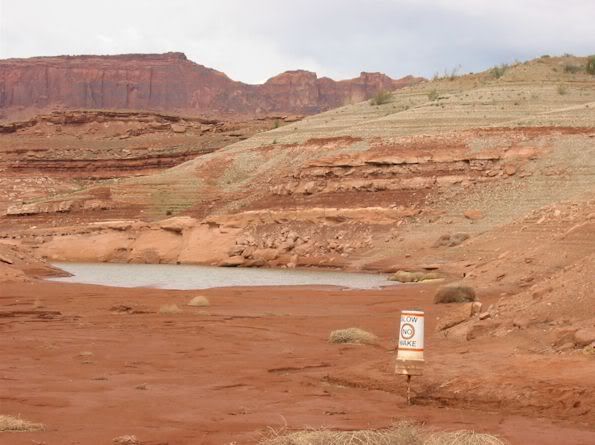
The Southwestern US – and the Colorado River basin in particular – has been in a drought since October 1999. As last week’s cover story in the San Diego Reader explained, “As far back as 2004, the U.S. Geological Survey started calling this drought “comparable to or more severe than the largest-known drought in 500 years.” The drought is having a catastrophic effect on vegetation, including the centuries-old oaks that dot the hillsides and canyons of Southern California:
Duncan McFetridge’s oaks and others suffering in the Cleveland National Forest get none of the Sacramento water. And trees are thirsty creatures. They say that a mature oak tree needs 300 to 500 gallons of water a day. But you have to wonder: these trees must have endured droughts like this before, and now they must have more capable roots than ever before. How is it they’re succumbing?
Orrin Davis, whose company Butler Drilling has been drilling water wells in the mountains east of San Diego since the 1960s, says oaks are vulnerable to changes in the water table. “Back in the ’70s, ’80s, you’d have to drill down an average of 400 feet to reach water. Today, it’s 800 to 900 feet. I’ve had to go to 1400 feet. In my 40 years, this is one of the longest droughts. As far as I’m concerned, this drought has been going since the early, mid-’90s.”
He says the die-off has been going on for years. “If it’s true that this is the worst drought for 500 years, these are drought conditions these oak trees have never experienced. And I would estimate Duncan’s oaks were 300 to 400 years old, the bigger ones.”
The lack of rainfall causes a cascade effect on water supplies and, consequently, on vegetation. Without rainfall, cities and developers have to draw down already-stressed aquifers, depleting the soil moisture that helps keep plants somewhat watered even in the dry months. As this is drawn down, the ongoing lack of rainfall means the aquifers aren’t getting replenished. Stresses on the Colorado River mean California must reduce its share of water drawn down from the river. And the ongoing problems with the Sierra snowpack and the Delta mean that Southern California gets less water delivered – reinforcing the stress on groundwater.
Worse, the lack of readily available water could potentially hamper firefighting efforts. Already this week the Metropolitan Water District estimated that over 600 million gallons of water had been used, a significant spike, to knock down the flames. Pumps ran overtime to keep the water pressure high enough for firefighters to use. As global warming distresses water supplies even further, the darkest scenario comes closer to reality – an inability to both supply cities and beat back hotter, more intense wildfire.
And it is not clear, and probably not likely, that there are any new sources of water to develop. This week the New York Times Magazine ran a feature story titled “The Future Is Drying Up” – focusing on the Colorado River drought and responses in Southern Nevada and the Colorado Front Rage to the crisis. Water managers in Colorado are trying to buy rights to agricultural water, both on the Plains and in the Rockies. But those sources are themselves stressed; there isn’t enough to go around. Taking her cues from William Mulholland, Pat Mulroy of the Southern Nevada Water Authority has decided to go after water supplies in the surrounding deserts – but here again it is not certain that the supplies are enough to meet demand.
This drought, so far, is a drop in the bucket compared to megadroughts that hit this state several centuries ago. As Mike Davis recounts in his crucial environmental history of Southern California, Ecology of Fear, researchers have discovered a 200-year period of drought hit the state around the 1200s, and suspect many more exist in the historical climate record. (This is the same drought believed to have forced the dispersal of the Anasazi culture in Arizona.)
Climate change in California is expected to produce a hotter and drier climate, with a reduced snowpack. Precipitation in the Sierra is expected to fall as rain more often than snow, forcing significant shifts in how water is stored. Nobel laureate Steven Chu of the Lawrence Berkeley National Lab told the NYT Magazine:
even the most optimistic climate models for the second half of this century suggest that 30 to 70 percent of the snowpack will disappear. “There’s a two-thirds chance there will be a disaster,” Chu said, “and that’s in the best scenario.”
The real crisis we face is a water crisis. Global warming will leave us drier and thirstier before it inundates our coastlines. And the warming climate, combined with reduced water supplies, will make the fires larger and more difficult to control. Just as many climatologists expect a repeat of Hurricane Katrina before long, we must confront the likelihood that the fires and evacuations experienced in SoCal this week will repeat themselves as well, so long as the drought continues.
What to do about this problem? In the next few weeks we’ll continue to discuss that subject here at Calitics. It is worth noting that these fires broke out just a few weeks after the collapse of the special session on water in Sacramento. Republicans, insisting that new dams be part of any water solution, torpedoed Democratic plans to both restore the delta and provide funds to localities to develop sustainable water supplies and, more importantly, stronger conservation measures. The California Republican Party has now apparently decided that the concept of global warming and any effort to do anything about it are their primary targets, and they will do anything to prevent action on global warming or the water crisis. Nevermind the fact that dams are pointless if less rain and snow are falling. Republicans appear quite happy to leave Californians at further risk of catastrophic water shortfalls. In their inaction, California’s future hangs in the balance.
Today, Chase Martyn of the Iow Independent reviewed a major policy speech by Bill Richardson earlier this week on how to improve the welfare of the human race and our environment. Martyn is no supporter of Richardson, noting “I expected would be ridden with gaffes, pie-in-the-sky policy proposals, and poll-tested mumbo jumbo. Having not seen Richardson stump in person for a period of two months, I had no idea what I was in for.”
Martyn came away highly impressed. Martyn described Richardson’s speech as “bold and informative. . . . I dare say he sounded presidential.
In his speech, Richardson set forth a global agenda to address the welfare of the human race, linking climate change, poverty, international disease and war. Richardson stated: “A hungry world will also hunger for scapegoats. A thirsty world will thirst for revenge. A world in crisis will be a world of anger and violence and terrorism.”
In Iowa this week, Bill Richardson gave a major speech on U.S. foreign policy, setting forth a global agenda to address welfare of the human race. He noted:
For decades, we believed that the only Apocalyptic threat to human civilization was the possibility of nuclear war.
Now we know better. We know that poverty and overpopulation affect us all. Refugee crises. Pandemic diseases. Climate change. Environmental degradation. Resource Depletion. Ethnic and political instability. These are not just the problems of individual nations. They are the problems of an interdependent world.
These threats are insidious. They may take decades to develop. And they respect no borders. Problems that span time and continents can only be solved through coordinated and cooperative global efforts.
Time is of the essence Richardson argued:
If we wait ten or twenty or fifty years to address these problems, it will already be too late. Environmental degradation takes many forms, but the most urgent is global climate change. There is an overwhelming scientific consensus that the planet is getting hotter. This is a fact, not a forecast.
The ice caps and glaciers are melting. Sea levels are rising.
300 million human beings live less than fifteen feet above sea level. Unless we act now, homes, villages, cities, and entire nations will be submerged.
Those not displaced by rising waters may go hungry as our unrestrained addiction to fossil fuels threatens both regional and global food shortages. Already severe drought has cut the world’s maize crops by as much as 15%, and wheat supplies will soon be at their lowest level in 26 years.
In a world where hundreds of millions go to bed hungry, major losses in staple crops foretell a time when we wake up to billions starving. In America … in a nation that has long fed the world…catastrophically rising temperatures threaten to decimate our farmland.
As a world traveler and peace maker, Richardson has a witnessed in person the challenges facing developing nations:
But we cannot comprehend the crushing burden of global poverty through statistics alone. Even in America, I have walked in communities with no access to clean water. We have all seen shamefully inadequate housing, and we know that even in our own country there are children that go to bed hungry every night.
In my travels abroad, I have seen human desperation — first hand. In the Sudan, I have been to camps filled with families who have lost every worldly possession. I was on the ground in Turkey during a terrible earthquake, where I saw impoverished mothers on their knees, digging through rubble for their lost children.
I’ve spent time in Darfur which today is the best-known example of environmental pressures cascading into instability and violence. A prolonged drought decimated the region’s grazing lands and nomadic herders moved south in search of water and food. They encroached upon farming land that belonged to other tribes, igniting the conflict that now has turned into a genocide.
We urgently need to find the courage and the will to address such crises. Not only because we are a decent and compassionate people, but also because of this inescapable reality: America will never be safe in a world riddled by poverty, desperation, hatred and violence.
A hungry world will also hunger for scapegoats. A thirsty world will thirst for revenge. A world in crisis will be a world of anger and violence and terrorism.
And unless and until we have the wisdom and the skill to secure all the nuclear weapons and fissile material in the world, that terrorism could result in unthinkable death and destruction.
The key points of Richardson’s global plan as summarized in the Des Moines Register are as follows:
• Work through existing United Nations mechanisms to prepare for the possibility that millions of people could be displaced because of global-warming-related flooding of deltas and coastal areas.
• Focus on education in developing nations, where 115 million children do not receive any schooling.
• Institute a nationwide, market-based cap and trade system that reduces carbon emissions in the U.S. by 80 percent by 2040. Make sure China and India develop clean energy.
• Accelerate research into cellulosic ethanol and other low-carbon biofuels and construct distribution networks for retailers.
• Develop cost-effective methods for harvesting fresh water and cleaning up polluted rivers and streams. Protect tropical rain forests and pursue aggressive reforestation programs.
• Fight cross-border crime, end slavery and make progress to eradicate human trafficking.
Specific to the UN, Richardson reaffirmed that the organization is a necessary and important framework to confront international problems. He called for reforming and invigorating the UN, and he said he understands better than anyone in the presidential race the organization’s shortcomings. Richardson added he knows the “incredible power” that the legitimacy of international cooperation can lend to peacekeeping, humanitarian relief, addressing climate change and economic development.
In reviewing Richardson’s speech, Chase Martyn of the Iowa Independent wrote:
If there were an award for “most improved presidential candidate” to be awarded in 2008, no one would deserve it more than Gov. Bill Richardson. The candidate Iowans got to know through a series of satirical TV ads over the summer is no longer kidding around. On the campaign trail here this week, Richardson left the distinct impression that he means business.
Kicking off his latest campaign swing Thursday, the New Mexico governor gave a speech on global threats, one which I expected would be ridden with gaffes, pie-in-the-sky policy proposals, and poll-tested mumbo jumbo. Having not seen Richardson stump in person for a period of two months, I had no idea what I was in for.
Richardson’s address, which he delivered using a teleprompter with unexpected precision and rhetorical skill, was bold and informative. Far from the repetition I have accustomed myself to in these sorts of speeches over the past few months, Richardson showed his true colors as a man devoted to humanitarianism and global citizenship. I dare say he sounded presidential.
Martyn was not the only one impressed with Richardson’s speech:
When he finished, the crowd of over 250 in downtown Des Moines gave him a standing ovation, but the format of the event — and the governor’s schedule — did not allow for questions.
Martyn decided to attend a town hall by Richardson that evening to see “if Richardson’s newfound seriousness would translate to his “town hall” style events or if it was merely a product of his teleprompter.”
I expected the torrential downpour that had lasted for much for much of the afternoon to depress turnout, but when I arrived 15 minutes early, the chairs in the “Story County Outdoor Recreation for Everyone” complex were already full.
True to form, Richardson kept his stump speech short, folding new sections of his speech (based on his address earlier in the day) into his standard talking points. “I’m troubled by the debate within the party on the war,” he said, before launching into a concise explanation of his plan to withdraw all troops from Iraq as soon as possible, because diplomacy will not succeed until our troops are gone. “I’m not happy with the congress,” he said. “They haven’t even made a dent” on Iraq policy.
He quickly concluded his remarks and opened the floor for questions, which covered a wide variety of topics. I had seen Richardson stumble at this point during previous events over the summer, so I was expecting things to get a little shaky. Again, my expectations were confounded.
He fielded questions on subjects ranging from peace between Israel and the Palestinians to fuel standards, and his answers were coherent and specific. He displayed an understanding of the complex problems facing the world, emphasizing the gravity of our situation, but he was careful to note that “I’m not trying to be an alarmist.”
. . . By the end of the event, Richardson had answered every question that audience members had, even if the last eight were done in rapid-fire succession. Onlookers were impressed enough that several filled out supporter cards, and I was impressed enough to eat a slice of humble pie (look at what I have written about Richardson in the past) and write this post.

 As anyone who’s had the misfortune to be stuck in a traffic jam on Highway 1 in Santa Cruz County knows, there’s a major traffic problem on the northern end of Monterey Bay. High housing costs in Santa Cruz have spurred growth over in Watsonville, where homes are (relatively) more affordable. When combined with the job engine of Silicon Valley just over the hill, this means there’s a LOT of traffic on Highway 1.
 There were hurricanes before Katrina, and Southern California wildfires before Witch Creek, Santiago Canyon, and Running Springs. As those of us who have ever lived in SoCal know, the fall winds can easily turn the brown hillsides into menacing flame.