Tag Archives: Mark Leno

Governor Signs Landmark LGBT Inclusive Education Bill

When Jerry Brown took over the Horseshoe, there was some thought that now we would finally be able to get of really good progressive legislation enacted.  Turns out that wasn’t entirely true, but nor was it entirely false.

Today, the Governor signed Mark Leno’s SB 48, a bill that ensures that the historical contributions of lesbian, gay, bisexual and transgender (LGBT) people and disabled individuals are accurately and fairly portrayed in instructional materials by adding these groups to the existing list of under-represented cultural and ethnic groups already included in the state’s inclusionary education requirements.  As it stands right now, the state requires inclusion of minority groups contributions to the state, this law simply adds on the disabled and LGBT to that list.

From an immediate standpoint, this probably means that students are going to learn a thing or two about Harvey Milk in their history classes. But in the long run, this bill will help decrease bullying and protect LGBT youth in our schools.

“I am awed and humbled to be part of this historic moment,” said Carolyn Laub, Executive Director of Gay-Straight Alliance Network. “By signing the FAIR Education Act and ending the exclusion of the LGBT community from instructional materials, Governor Brown has realized the hopes of youth who have been fighting for safe and inclusive schools, where all students learn about our history and gain respect for each other’s differences as a result. This is a part of the American story that we can be proud to know all students will learn.”

What if Senator Feinstein Retired? (Fantasy Draft)

(Cross-posted on DailyKos)

As many of you already know, a recent Field Poll survey was released showing Senator Dianne Feinstein slipping in her approval rating. 43% of California voters surveyed approve of Sen. Feinstein, while 39% disapprove– the highest disapproval rating she’s had since first being elected to office in 1992. While these numbers don’t necessarily spell trouble for California’s senior senator, they do indicate that people are starting to think of a changing of the guards in the Golden State. It most certainly has crossed her mind as well.

There are always politicians and prominent Californians waiting in the wings for political jockeying. With Feinstein reaching 80 years of age soon, more and more elected officials are prepping their resumes and spending extra time coddling donors in preparation for the inevitable.

So it begs the speculative question, who would be ready and able to run a statewide campaign for the United States Senate in the event of Senator Dianne Feinstein’s retirement? Who would make a great Senator? Who should make for a great race? Who would be an abysmal choice? In this “fantasy draft” diary, I’ve narrowed it down to the 13 most probable potential candidates who are at least thinking about a potential run from the Democratic side. All the apparent pros and cons will be listed, and your suggestions/comments are always welcome. And by all means, if you know of any Republicans that would seem likely, include those as well!

Photobucket

1. Lt.Gov. Gavin Newsom- Gavin Newsom is destined for something much bigger than the LG office he currently occupies. There are already rumors that he’s positioning himself to run for House, but being 1 of 435 doesn’t quite sound like what he wants out of life. Don’t get me wrong, Newsom would make a great United States Senator. He’s got the charisma and charm and policy ideas to help shape our country for many years to come. His negatives, however, remain elephants in the room. This IS the guy who slept with his campaign manager’s wife. This IS the guy who ignited a gay marriage firestorm in the height of the Bush era. He’s also the former mayor of San Francisco, the city hated most along the central valley and eastern portion of the state. It seems like a hard road to walk, but in the end he seems most likely to succeed and thrive.

Photobucket

2. Congressman John Garamendi- I will admit I’m a little biased in that I am a huge John Garamendi fan. As our Insurance Commissioner, he did a bang up job protecting consumers. As Lieutenant Governor, he made a statewide presence that seemed unprecedented. Now, as a member of the House of Representatives, Garamendi is fighting for a fairly progressive agenda, and I like that. However, Garamendi has made the appearance of running for every office short of dog catcher– and it’s possible he’s considered that job too at one point. It might also be hard to support an already “older” candidate: the 60’s might still be considered young to most, but in the world of politics that’s up there!

Photobucket

3. Congressman Xavier Becerra- Rep. Becerra is yet another in a long line of California politicians looking for the next step up. After running for LA mayor in 2001, Becerra was once considered to join the Obama Administration as US Trade Representative. He has a leg up in being vocal and policy-driven, and is a member of the House Democratic Leadership (meaning his national fundraising potential is greater than most). However, outside of his LA home base, very few people know who Xavier Becerra is. It will be a huge obstacle to overcome.

Photobucket

4. Congresswoman Loretta Sanchez- A member of the Blue Dog Coalition and Representative of conservative Orange County might make it seem like Loretta Sanchez would fare well with conservatives, but she has been long-considered persona non grata with the Tea Party and is a constant target in her re-election bids. This could make her a great candidate, someone used to the salvos and moderate enough to win over right-leaning independents. This could also make her a highly unpopular candidate with traditional Democrats… you know, the people who she’d HAVE to have on her side to win.

Photobucket

5. Secretary of State Debra Bowen- After a rocky primary battle with LA City Councilwoman Janice Hahn, it seems unlikely that our amazing SoS Debra Bowen would think about putting herself through the rigors of a US Senate race. However, comparing her disappointing CA-36 campaign with a statewide race is highly unfair. Debra Bowen has proven herself to be an effective and popular Secretary of State. She’d have no problem being in the top tier of a potential senate match-up, if she goes with a different campaign team and trusts her instincts a little more.

Photobucket

6. Attorney General Kamala Harris- Perhaps one of the nation’s brightest rising stars in the Democratic Primary, Kamala Harris has the potential to run for governor or US Senate and be instantly considered one of the frontrunners. She’s sharp, bold, brave and charismatic. She is willing to fight, is young, and she’d have the unique potential distinction of being our country’s first Indian American Senator (as far as my recollection serves). The problem with Kamala Harris isn’t necessarily a problem though: Harris is actually on a short list of a different sort. The scuttlebutt in Washington DC is that Kamala Harris tops President Obama’s list for a possible replacement to current US Attorney General Eric Holder in a 2nd Obama administration.

Photobucket

7. Insurance Commissioner Dave Jones- There aren’t any other people on this list more genuinely friendly than Dave Jones (with the exception of Debra Bowen). As a Sacramento City Councilman to state assemblyman and now as Insurance Commissioner, Jones has served us all exceptionally well. He’s brilliant and his heart is in the right place. The problem with Dave Jones is that he’s not built for the United States Senate. In my mind, Dave Jones belongs in the Governor’s Mansion. Trust me, I’d be happy to see this man representing our great state, but there’s a distinct difference in leadership style that Dave has that makes him my dream choice for governor one day.

Photobucket

8. State Senator Kevin De Leon- Sen. De Leon is a former teacher who knows what’s going on in America’s classrooms. He’s seen it all, and that experience is much-needed in the Senate. Much like Rep. Becerra and others down the list, name recognition is going to be a problem. However, Kevin De Leon is a shrewd politician, and his roots travel deep. He’d be an instant favorite with the education crowd, and environmental groups will be pleased with his record. He’d be a dark horse, but one worth wagering on.

Photobucket

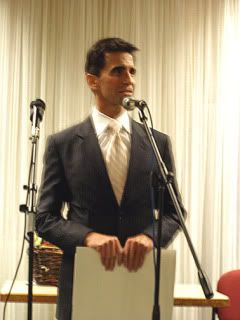
9. State Senator Mark Leno- Sen. Leno is one of the few openly LGBT members of the California state legislature. Being a gay Jew might not work in Alabama, but in California it’s a non-issue (maybe even a plus). Leno has long been a champion for the environment, healthcare and equality, making him an instant hit with the grassroots activist folks. It would be hard to dismiss his hemp legalization efforts, but in a state that’s pretty evenly divided on the issue Leno wouldn’t have a hard time moving forward.

Photobucket

10. Assemblyman Isadore Hall- Hardly a household name, Isadore Hall could make the case that he has what it takes to serve us in the Senate. From serving as a community college trustee to serving on the Compton City Council before joining the Assembly, Hall has the potential to bring a distinct voice to Washington, one that speaks up for the urban residents of America that often get overlooked. Of course, many can say his relatively young age (39) and inexperience (joining the Assembly in 2008) might handicap Hall. I wouldn’t be surprised if this rising star ends up proving them all wrong.

Photobucket

11. Assemblywoman Fiona Ma- If ever there was a perfect example of a leader standing up for women & children. From authoring bills on toxic paints in toys to domestic violence, Ma has done a lot for California families. It’s really hard to tell, however, if Ma is genuine or not. Her ambition is slightly unsettling, but it may be just the kind of drive we need in the Senate.

Photobucket

12. Mayor Antonio Villaraigosa (Los Angeles)- Conventional wisdom would say that the former state assembly speaker and mayor of one of the world’s largest cities would be an instant leader in the race to succeed Dianne Feinstein, but unfortunately the candidate would be Antonio Villaraigosa. Mired in scandals over the years, Villaraisgosa represents the backroom politician scheming America loves to hate. Will he raise tons of cash? Yes. Will he campaign hard and for issues we probably will care about? Yes. But will he be a good senator?

Photobucket

13. Mayor Kevin Johnson (Sacramento)- Quite easily the least likely to succeed candidate on this list, Kevin Johnson was mostly just included so I could mention how terrible Kevin Johnson is. Far from being considered intelligent, thoughtful, or concerned about his constituency. The only thing going for Johnson is his ability to snake his way into the limelight to pontificate on whatever issue he thinks he can speak on. As a Sacramentan, I am thoroughly embarrassed of my mayor. BUT, having said that, Johnson has proven that he can raise a lot of money from big named supporters like Gavin Newsom, Charles Barkley, Kamala Harris and even has the attention of the White House. He’d be a contender, but you can bet I’d do all I can to let everyone know just what kind of Senator they’d be getting.

So what are your thoughts? Comments are, as always, welcome!

Wed Jun 22, 2011 at  8:21 AM PT: A POLL has been added… why didn’t I think of this earlier?!?!

[poll id=”

454

“]

Local Taxation, Negotiation, and A Mixed Bag of Policy

PhotobucketFor a few years, San Francisco’s legislators have been pushing, in one form or another, legislation to allow at least that county to control additional forms of taxation.  The chief target of that has been the vehicle license fee since the time that Gov. Schwarzenegger lopped off a huge chunk of revenue from that source.  Both Sen. Migden and Leno have been keen on allowing my fair city to restore the VLF to return revenue to the City and County of San Francisco.

Now, there have been a few stumbling blocks around this.  Logistically, the taxes would be approved by different majorities depending upon the election circumstances.  That’s not an overwhelming obstacle, but certainly getting 2/3 is challenging.  Not impossible, as the slew of parcel taxes over the past few years has shown, but difficult nonetheless.

But in a larger sense, it would be something of a declaration of war against the Republicans and their ideology.  And frankly Gov. Schwarzenegger was having no part of that policy, or of the politics.  But things are different now; Gov. Brown is not Gov. Schwarzenegger, and the time for a smooth reconciliation is drawing ever smaller.

And so, the possibility of local taxation is back in a major way.  This would allow counties to tax a whole slew of items that were previously regulated only by the state, and the anti-taxers are none too pleased.  Dan Morain has an excellent column on the subject in today’s Bee:

The latest: Grant all 58 counties the power to tax everything from booze and cigarettes to oil extraction and personal income. Don’t forget cars, soda pop and more, assuming voters would approve the new local levies. … Lobbyists representing the oil, tobacco, soft drink, auto industry and many more are taking the latest tactic in California’s budget battle seriously.

“I know it has gotten the attention of a lot of people, and I’m glad,” Steinberg told me Wednesday. “The majority party needs to begin, appropriately and intelligently, using the power of its majority.  One way or another, it is our responsibility to do everything we can do to avoid $5 billion in cuts to education, and billions in cuts to public safety.” (SacBee)

As this doesn’t actually raise any taxes, it is a majority vote measure. No Republican votes are necessary.  Tony Strickland was suitably apoplectic, but really nothing new there.  And as the budget fight grows longer, and more teachers get pink slips, county supervisors are going to find this ability extremely attractive.  While voters won’t have the right to vote on statewide taxes, they may get the chance to vote on local taxes.

As Morain suggests in his column, this really isn’t the ideal situation.  It’s one more way to draw the line between the haves and the havenots of the state.  What we’ll end up with is Bay Area counties with more stable revenue streams, while the Central Valley faces ever deepening cuts.  The inequality would be both troubling, and possibly violate some laws.

On the other hand, counties that choose a more reasonable fiscal path shouldn’t necessarily be bogged down by an obstinate minority in the Legislature.  And if this is what it is coming to, then so be it.  The state, and the counties, need additional revenue.  There are several counties that have shown themselves ready to tax themselves, and we shouldn’t rule that out right away.  If the decision is between inconsistency across counties, and keeping thousands of teachers in classrooms, I suspect many Californians would opt for the inconsistency.  Heck, at least that way our kids can learn about inconsistency at school.

Perhaps this is just a negotiation ploy, but it is one that should be viewed from a serious policy perspective.  It’s certainly not the best alternative, but it is among the best options that we have remaining, given the Republican Minority.

Leno Calls Bullshit

Mark Leno, the Senate Budget Committee Chairman, called out Republicans today on the anti-tax pledge:

Sen. Bob Huff, R-Diamond Bar, vice chairman of the Senate budget committee, said it was unfair that Republicans had to vote on cuts without knowing what other ideas Democrats are working on.

That prompted a sharp response from Sen. Mark Leno, D-San Francisco, chairman of the committee. He suggested that Republicans face no choice but to vote for all of Brown’s cuts since most GOP legislators have signed no-tax pledges.

“It’s second grade math, balancing this budget,” Leno said. “It’s addition and subtraction. You’ve already taken addition off the table, so it’s actually a given that you’re going to accept every one of the cuts.”

“But we, because we are not signing pledges taking either addition or subtraction off the table, are here to massage this and see how we can soften some of the edges,” he added. “You don’t have that option because you abrogated that opportunity before you even got here.”(SacBee)

Aww, it must be hard to not be informed what cuts they are going to vote on. On the flip side, they still have yet to actually propose any cuts, so there’s that.

On the more practical side, Sen. Leno and his colleagues concurred with the Governor on most of his cuts.  However, they did block a couple. Most notably, they killed the proposal to cap Medi-Cal patients at 10 appointments per year.

PG&E Earned This

If ever any corporation earned regulatory legislation, PG&E did so when they spent nearly $50 million of ratepayer funds to try to pass a constitutional amendment to guarantee the monopoly.  And Mark Leno is making it happen.

Senator Mark Leno today announced legislation that would prevent Pacific Gas & Electric Company (PG&E) from using ratepayer funds to finance future political campaigns. The bill allows the corporation to continue participating in political campaigns, but stipulates that money derived from ratepayers cannot be used for political or public affairs expenditures.

Senator Leno’s bill requires PG&E to report its annual political and public affairs spending to the California Public Utilities Commission. The PUC will ensure that all political and public affairs spending identified in this report did not derive from ratepayer funds.

This is already the rule for municipal utitilies.  And, frankly, if PG&E wants to guarantee its monopoly so much, they should be totally fine with competing on a level playing field.

What do you think the odds of that are?

Sen. Mark Leno and some intriguing musical chairs

STATE SEN. Mark Leno has represented the Marin/Sonoma 3rd District for only a short time, but might be interested in trading in that seat for the mayor’s job in San Francisco. There are many variables that could get in the way.

More over the flip…

Leno would be eligible to run for a second four-year term in 2012. However, he could be campaigning in different ZIP codes when the district lines are redrawn next year as a result of the decennial census-taking. These will be determined by a newly created nonpartisan commission that stripped the Legislature of this power with passage of Proposition 11.

When that work is done, Leno’s district, which presently includes a portion of San Francisco, could be moved entirely north of the Golden Gate or possibly reoriented south of the city to exclude Marin and Sonoma entirely.

It could also remain unchanged – a result which Leno would prefer – since he received 80 percent of the general election vote after a very contentious primary that ousted former Senator Carole Migden in what is a very safe Democratic district.

Apparently Leno’s interest in City Hall was bolstered by a recent San Francisco Chamber of Commerce survey of nine wannabe candidates which showed him coming in first. Until now fellow state Sen. Leland Yee had been leading in the early polls.

When asked how serious these ambitions are, Leno responded, “It is way off in the future and I love representing the people in Marin and Sonoma.”

Any plans he may have will be further complicated by several possible scenarios all of which involve Mayor Gavin Newsom’s decision to run for lieutenant governor.

Were Newsom to win in the primary, and then in November beat the sitting lieutenant governor, most likely Republican Sen. Abe Maldonado, assuming the Assembly confirms him, an interim mayor would have to be either appointed or elected to serve out the year remaining in Newsom’s term.

The guessing game is in full swing as to who that might be with the incumbent thereby getting a strong handle up in the next election.

Former Mayor Willie Brown is mentioned as the safest choice since he cannot run for another term. Another alternative might be the appointment of Board President David Chiu, as acting mayor providing he could muster six votes besides his own.

The principal beneficiary of a Leno Administration would be San Rafael Assemblyman Jared Huffman, who is termed out in 2012 and will no doubt be eying the state Senate.

But were Leno to lose his bid for mayor, since he does not have to surrender his seat to run, he could face Huffman who he would consider his strongest opponent in a re-election race.

The last piece of this musical chairs puzzle revolves around Rep. Lynn Woolsey’s plans. Were she to decide to retire, that seat would be an immediate prize with both Huffman and Leno potential contenders.

For now, Leno plans on becoming better known in his district. Although their future paths could tangle, he and Huffman enjoy a close working relationship and are providing North Bay voters with a double punch that is the strongest in years.

In my next column I take a closer look at Leno’s track record and his stances on controversial issues such as Marin Clean Energy (he is strongly in favor), and the state’s fiscal mess.

Support the EPA Fire Safety Agreement

We have reached a pivotal point in fire safety. Recently, the fire protection industry announced a new generation of fire safety products. Citizens for Fire Safety has worked tirelessly to encourage and promote this next generation of fire retardant products that are safe, effective and environmentally friendly. This groundbreaking move is one of many in the industry’s unwavering commitment to environmental sustainability and fire safety.

This commitment has been hailed by the US Environmental Protection Agency, credited by the International Association of Fire Fighters, and will undoubtedly prove to be the paramount model of sustainable fire safety in the future.

The EPA agreement sets forth a rational, effective transition to newer alternatives, while allowing critical services such as police, fire and airlines to continue to use existing fire safety products that are critically important to saving lives. Proactive fire safety companies have already announced the production of environmentally-friendly fire retardants which minimize the use of raw materials, energy, byproducts and waste. This progressive thinking is largely a result of the efforts of Citizens for Fire Safety and their coalition of supporters across the nation.

As we make this transition, we must remain watchful of legislation that would preemptively ban existing products, leaving communities without adequate fire safety protection. This kind of legislation has been recently considered in states like Maryland, Wisconsin, Minnesota, Alaska, New York and Connecticut. While these states should be commended for their vigilance in the fight for fire safety and environmental health, we believe that the timeline that has been worked out with the EPA is the most appropriate. Let’s trust the scientists of the federal environmental agencies and not act precipitously to put our families and children at risk of serious injury or death. An effective national solution to this critical issue is the only solution that is truly safe.

In order to stay at the forefront of fire safety, Citizens for Fire Safety needs your support. It is our job to keep you informed as an important new generation of fire safety emerges. If you have any questions regarding the EPA announcement, state legislation, or require more information, please do not hesitate to contact Citizens for Fire Safety at 310-310-2616 or [email protected].

Reforming Corrections: We’ve Only Just Begun

(This originally appeared in Capitol Weekly last week, but I thought it was worth reproducing here. – promoted by Brian Leubitz)

The Legislature finally broke through nearly impassable political barriers and in September enacted a set of evidence-based reforms to California’s correctional system.  These reforms make common-sense revisions, like updating some property crime thresholds to reflect the cost of living, many of which had not been changed since 1982.  They refocus parole to apply limited resources on higher-risk offenders, and will improve how parolees are supervised, including the use of a “Parole Reentry Court” for parolees with substance abuse or mental illness histories.  Prison credit laws have been retooled to create incentives for inmates to follow prison rules and programs.  

Legislation enacted this year will launch an innovative system of performance-based funding for supervising adult felony probationers.  About 40 percent of new prison admissions are offenders who failed felony probation.  SB 678 (Leno – Benoit) provides a formula for sharing state savings with probation when those savings are achieved because of reduced prison admissions attributable to better felony probation outcomes.

While immensely worthwhile, these reforms will not be enough to achieve the savings and public safety improvements California needs.  (EDIT by Brian: There’s more over the flip…)

While immensely worthwhile, these reforms will not be enough to achieve the savings and public safety improvements California needs. The Senate version of prison reform, ABx3 14 (Arambula), included these reforms and more.  The Senate-approved bill gave the prison secretary the authority to order home detention with electronic monitoring for certain risk-assessed inmates — the same authority sheriffs have now to manage their jail populations.  Significantly, the Senate version included a sentencing commission, which has been recommended by many experts over the years.

California courts have referred to our sentencing laws as “labyrinthine procedures,” “mind-numbingly complicated,” and “a legislative monstrosity, which is bewildering in its complexity.”  Over 30 years ago, California changed from indeterminate sentencing to determinate sentencing.   Since then, over 1,000 crime bills have been enacted into law.  Crime du jour sentencing laws have supplied grist for the political mill and eroded coherence to our sentencing system.    

Regrettably, these much-needed reforms were not achieved in 2009, but they must be attained in 2010.  California’s prison overcrowding crisis has created conditions that are unsafe, and overloaded prisons have become a crushing financial burden on the taxpayers.  According to the Legislative Analyst’s office, state spending on corrections has increased by roughly $8.4 billion, or 450 percent, between 1988-89 and 2008-09, an average annual increase of about 9 percent.  Corrections takes up about twice as much of the state budget than it did 20 years ago, increasing from about 5 percent to 11 percent of general fund spending – the highest in the nation.  The prison population has increased by 125 percent over the past 20 years.  California is now spending more on corrections than on higher education.  

The federal court has taken over a state prison health care system which has cost California taxpayers hundreds of millions of dollars.  As the number of inmates imprisoned under “tough on crime” laws continues to grow and those inmates age, the cost of incarcerating this elderly prison population will continue to drive health care costs at an unsustainable rate.  

These unfinished reforms are not the only changes California’s criminal justice system needs to produce better public safety outcomes.  At a cost of nearly $250,000 annually per ward, California’s state-run juvenile institutions need to be revamped.  The recommendations of the California Commission on the Fair Administration of Justice should be enacted to ensure that those in prison are there because they are guilty, and not because of bad science or unreliable evidence.  The Legislature should evaluate whether the special circumstances allowing for the imposition of capital punishment in this state are too broad and too inconsistently applied, and how the costs of the imposition of the death penalty as opposed to life without parole impacts the budgets of the prison system, the courts and the counties.  Court and confinement costs in death penalty cases are estimated to be approximately $137.7 million a year, and that number increases as death row grows yearly.  Alternatively, life without parole cases would cost the state approximately $11.5 million a year.  These are the kinds of policies that warrant legislative scrutiny in the coming months.  

In 2009, thanks in large part to the “perfect storm” of prison overcrowding and the state’s fiscal crisis, the Legislature enacted a first set of corrections reforms.  These reforms, however, will not be enough to achieve the whopping $1.2 billion in cuts to the corrections’ budget this year, or the public safety outcomes Californians deserve.  Indeed, we have only just begun the process for meaningful reform.

Marin Legislators Effectively Continue Death Penalty Moratorium

Death ChamberSen. Mark Leno and Asm. Jared Huffman have today essentially extended the state’s death penalty moratorium by at least temporarily blocking the expansion of the death chamber at San Quentin Prison.

Last-minute objections from Assemblyman Jared Huffman and Sen. Mark Leno have prompted state Treasurer Bill Lockyer to put on hold plans for issuing bonds to pay for the expansion of death row at San Quentin State Prison.

“I think there is a very good chance that we have prevented any attempt by this administration to jam this project through,” said Huffman, D-San Rafael.

Huffman and Leno, D-San Francisco, sent a letter to Lockyer on Wednesday asserting that sale of the bonds would be illegal until resolution of litigation challenging Gov. Arnold Schwarzenegger’s veto of budget language on conditions for financing of the project.

“Because of the legal issues raised by the letter, we downsized our bond sale to basically take financing for the San Quentin condemned inmate complex out of the sale,” Tom Dresslar, a spokesman for the treasurer, said Thursday. (Marin I-J)

The state is under a court order (yes…another court order) to not execute until they can constitutionally carry out the death sentences. Michael Angelo Morales (and his legal team) successfully argued that the chamber is cruel and unusual under the 8th Amendment as it now stands.

Incidentally, California has carried out just 13 executions since the nationwide moratorium was lifted in 1976.

Arnold Signs Harvey Milk Day and Out of State Marriages Bill

Sen. Mark Leno has a diverse legislative platform, from single payer health care to fighting against toxics in our homes.  However, it is for his work for marriage equality that he has built his name in San Francisco and Sacramento.

Today, the Senator bags two more achievements. First, after getting a veto from the governor last year, the state will now declare May 22 Harvey Milk Day (not a day-off though).  The recognition for a man who was dedicated to pushing for equal rights for himself and his community is an important marker for the fight for full equality for the LGBT community. It does not win us any additional rights, but it does give the state a chance to pause and reflect on a man who gave everything for the struggle.

On the other hand, Sen. Leno’s SB 54 does have an immediate and real impact that goes beyond symbolism. The bill would grant marriages performed outside of the state before Prop 8 was passed full marriage status, just as the same-sex marriages performed between June and November. Marriages that were performed after that Nov. 5 date will get all the rights and benefits of a California marriage save the moniker “marriage.”

Apparently Arnold saw the confusion brought about by the situation that Californians who had previously been married in, say Massachusetts, were in. They were told that they didn’t need to renew their marriage, but the law was entirely unclear on the issue.

In a signing message, Schwarzenegger said California will not recognize the couples as married but will “provide the same legal protections that would otherwise be available to couples that enter into civil unions or domestic partnerships out-of-state. In short, this measure honors the will of the People in enacting Proposition 8 while providing important protections to those unions legally entered into in other states.” (SacBee 10/12/09)

Expect SB 54 to be challenged by at least some of the right-wingers. There’s not much of a substantive legal argument against these measures given the case law as it stands, but that’s never stopped them before.

UPDATE: I forgot to point out that Arnold vetoed two transgendered focused bills, but Pam caught it. The vetoed bills would have made birth certificate records easier to handle and allowed for special protection of transgendered prisoners.